
The foxtail pine, found in the Kings Canyon National Parks and Sequoia National Park along with the subalpine zones, is a tree with great longevity. This is not a commercial plant and are not harvested commonly.
Pine
Pine refers to any coniferous tree or shrub belonging to the genus Pinus categorized under the family Pinaceae. Pines are found throughout the world, mainly in the northern temperate regions. Although two pine species may look precisely similar, counting the number of needles in each bundle can help identify them. They have comparatively soft timber, but they are commercially sold as soft (pinyon, sugar, and white) or hard (loblolly, Corsican, and Scotch) pines.

Scientific Classification | |
| Kingdom | Plantae |
| Clade | Tracheophytes |
| Division | Pinophyta |
| Class | Pinopsida |
| Order | Pinales |
| Family | Pinaceae |
| Subfamily | Pinoideae |
| Genus | Pinus |
List of Different Types of Pine Trees
As listed by the Missouri Botanical Garden and Royal Botanic Gardens at Kew, the genus Pinus consists of 126 species and 35 unresolved species. These trees are subdivided into two subgenera distinguished by their leaf, cone, and seed characteristics.
Subgenus Pinus
Some of the common pine species included in this subgenus are given below:
- Sikang pine
- Korean red pine
- Huangshan pine
- Khasi pine
- Masson’s pine
- Mountain pine
- Sumatran pine
- Luchu pine
- European black pine
- Red pine
- Japanese black pine
- Taiwan red pine
- Chinese red pine
- Tropical pine
- Aleppo pine
- Turkish pine
- Canary Island pine
- Bosnian pine
- Chir pine
- Stone pine
- Ponderosa pine
- Gray pine
- Torrey pine
- Jeffrey pine
- Apache pine
- Arizona pine
- Coulter pine
- Lodgepole pine
- Sand pine
- Virginia pine
- Loblolly pine
- Cuban pine
- Spruce pine
- Caribbean pine
- Shortleaf pine
- Longleaf pine
- Chihuahua pine
- Jack pine
Subgenus Strobus
Some of the white and soft pines included in this subgenus are listed here.
- Foxtail pine
- Colorado pinyon
- Mexican pinyon
- Border pinyon
- Weeping pinyon
- Parry pinyon
- Potosi pinyon
- Texas pinyon
- Nelson’s pinyon
- Eastern white pine
- Siberian pine
- Blue pine
- Mexican white pine
- Swiss pine
- Limber pine
- Chinese white pine
- Bhutan white pine
Aside from the different pine species that are mentioned above, several cultivars including ‘Dragon’s Eye’ Korean pine, ‘Oregon Green’ Austrian pine, ‘Watereri’ Scots pine, ‘Nisbet’s Gold’ Scots pine, ‘Joppi’ Jeffrey pine, ‘Cleary’ Japanese white pine, and ‘Winter Sun’ mountain pine have been produced.

Quick Information | |
| Tree Type | Evergreen, coniferous, resinous |
| Identification | Height: 50-260 ft, smallest being the Siberian dwarf pine (3-10 ft) and the tallest being the ponderosa pine (200-268 ft) Leaves: Needle-like adult leaves, bundled in clusters, 1-7 needles per fascicle Trunk Diameter: 1.0-1.6 ft Bark: Thick, scaly, woody outer layer, and a soft, moist inner layer Cones: Small male cones, 1-5 cm long, fall off after shedding the pollens; female cones measure 3-60 cm in length Seeds: Small, winged Branches: Horizontal, either long or short shoots Crown: Conical |
| Distribution | Temperate and subtropical regions in Northern and Southern Hemispheres |
| Habitat | Mountainous areas, semi-arid deserts, rainforests |
| USDA Hardiness Zone | 5-11 |
| Growth Rate | Average, 1-3 feet per year |
| Lifespan | Usually live for 100-1,000, the oldest being a Great Basin bristlecone pine called ‘Methuselah’ that is 4,600 years old |
| Growing Conditions | Sunlight: Full to partial sun Soil: Well-drained, sandy, acidic or alkaline Water: 1 to 3 inches per week |
| Drought Tolerance | Species like Limber, Ponderosa, Mugo, Pinyon, and Bristlecone withstand the dry climate |
| Diseases & Pests | Root rot, gall rust, blister rust, needle rust, Diplodia tip blight, Cyclaneusma needle cast, and Lophodermium needle cast; pests include aphids, caterpillars, borers, weevils, and mealybugs |
| Reproductive System | Monoecious |
| Propagation | From seeds and stem cuttings |
| Wildlife Value | Needles are used as food by several species of moth and butterfly caterpillars; seeds are eaten by jays, crossbills, nutcrackers, grouse, woodpeckers, siskins, and squirrels |
| Uses | Wood is used for construction and making carpentry items, as ornamental trees and Christmas tree; seeds are used for baking and cooking, needles are boiled in water for making tea |
| IUCN Conservation Status | The population of several pine species is decreasing, including the Longleaf pine and Parana pine, which are regarded as endangered and critically endangered respectively |
Interesting Facts
- A group of 400 oddly-shaped pine trees is found in the Crooked Forest located near Gryfino in West Pomerania Province, Poland.
- Pine resin is typically used in Chinese medicine for treating wounds, burns, and other skin conditions.
References
- https://www.britannica.com/plant/pine
- https://conifersociety.org/conifers/articles/10-types-of-pine-trees-that-everyone-should-know/
- https://www.thespruce.com/pine-trees-from-around-the-world-3269718
- http://www.theplantlist.org/tpl1.1/ search?q=pinus
- https://static.colostate.edu/client-files/csfs/pdfs/droughttrees.pdf
- https://extension.psu.edu/pine-diseases
- https://www.iucnredlist.org/species/ 39068/2886222
- https://www.iucnredlist.org/species/ 32975/2829141
Western White Pine

The western white pine is an ornamental species of tree that is blessed with an incredible endurance capacity. The beautiful coniferous tree has an open crown.

Loblolly Pine

Loblolly pine is second most widespread of trees in the United States, after the red maple. It is a fast growing conifer. One particular individual in Arkansas is over 300 years of age. The origin of its name is the combination of the two words lob and lolly; the former means bubbling porridge while lolly means any pot-boiled food like soup or broth.
Jeffrey Pine

Jeffrey pine is a species of conifers found in North America at an altitude of 1,500 to 2,900 m. These pine trees, named after the Scottish botanist John Jeffrey, slightly resemble Ponderosa pine though they can be differentiated based on their needles, buds, cones, and bark.
Eastern White Pine

Eastern White Pine is a tree native to eastern North America. It is a large pine tree with historical significance as the Iroquois (Native American Haudenosaunee) considered it as the “Tree of Peace” and chose it as a symbol for the unity of the Iroquois Confederacy.
Coulter Pine

The Coulter pine is an evergreen coniferous tree native to coastal mountains of southern California and northern Baja California. Named after an Irish botanist and physician Thomas Coulter, this species is also found nearby Diamond Mines Regional Preserve located in the north of Mount Diablo State Park. Jeffery pine tree is closely related with Coulter pine and they commonly share their habitat with Ponderosa pine.
Sugar Pine
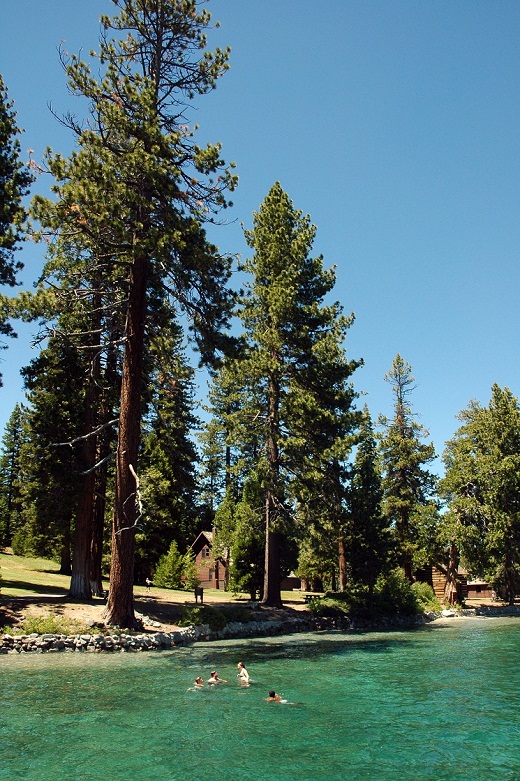
The sugar pine tree, often called the ‘king of the conifers’ is the largest of all pines, growing to a height surpassed only by a few other coniferous trees. It can be found throughout the mountains of the North American Pacific Coast.
Norway Pine (Red Pine)

Norway pine also called red pine is a species of medium-sized, evergreen coniferous trees found in North America. Growing in pure, hardwood, or mixed-conifer stands, the Norway pine commonly occurs with Virginia pine, Table Mountain pine, pitch pine, and eastern white pine. It has a conical crown that becomes rounded dome at maturity.
Ponderosa Pine

Ponderosa pine is a species of lean and erect coniferous trees distributed in the western US and Canada. It is one of the most abundant conifer species in America and is valued for its rugged-looking and resilient timber as well as for recreational use.
Scots Pine

Scots pines are one of the most extensively distributed conifers in the world, found in large parts of Eurasia. They grow from sea level to a height of 2400 m, the elevation increasing from north to south of its native range.
Austrian Pine

The Austrian Pine also called the black pine is one of the toughest pine species widely spread across southern and eastern Mediterranean Europe as well as the mountainous regions of North Africa. These pine trees have gained prominence in the Midwestern US states due to their adaptability, bold texture, and fullness of foliage.
Pinyon Pine

Pinyon or Piñon is a species of small to medium-sized pine trees growing at an altitude of 1,400-3,000 m. As a drought-resistant tree, the Pinyon intermixes with junipers and dominates the forests of the semi-desert regions in the southwestern US.
Shortleaf Pine

The Shortleaf Pine is a medium- to large-sized tree, indigenous to the eastern United States. The tree varies in form – sometimes straight, sometimes twisted with an asymmetrical crown. It can tolerate varied soil and site conditions and maintains steady growth rate for a long period.
Virginia Pine

Once known as a ‘forest weed,’ the Virginia pine tree has come a long way, gaining a reputation as a Christmas tree, despite its sharp needles. Its tendency to grow in poor soils and apparent capability to grow in places, where most other pines won’t, have made it one of the most favored trees in North America.
Whitebark Pine

Whitebark pine or white pine is a species of small- to medium-sized subalpine conifers found at mid to high elevations in the mountainous regions of Canada and western United States. From small trees with broad crowns and rapidly spreading trunks to shrubs with twisted branches and widely extended crowns, the whitebarks vary in shape as they are continuously exposed to severe freezing winds.
Japanese Black Pine

Japanese black pine, with its spreading and swaying branches, is a species of evergreen, coniferous trees native to the coastal and mountainous regions of South Korea and Japan. Being adaptable to a variety of soil conditions, these conifers are commonly used for seaside plantings and beach landscaping.
Limber Pine

The very durable Limber Pine is a species of high-elevation, evergreen coniferous trees typically found in the mountainous regions of the Western US, Canada, and Mexico. These trees have an initial pyramidal structure but at maturity, their crown becomes more rounded, while those limber pines growing in high alpine sites are relatively shorter with a shrubby and twisted form.