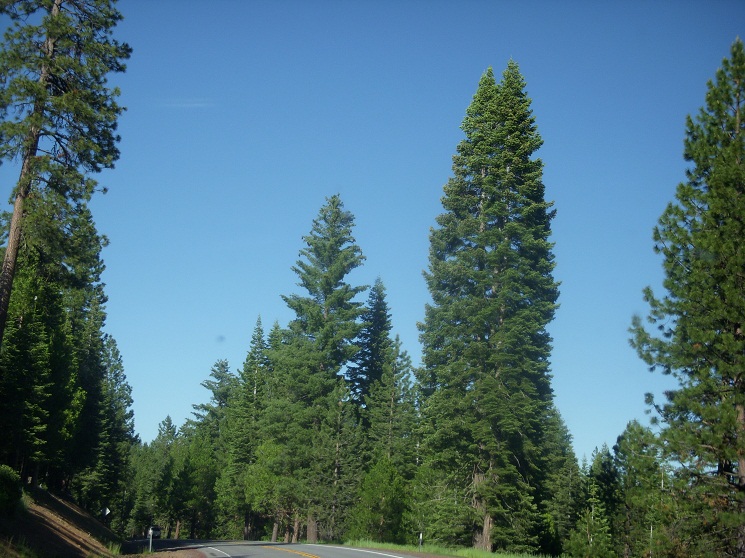
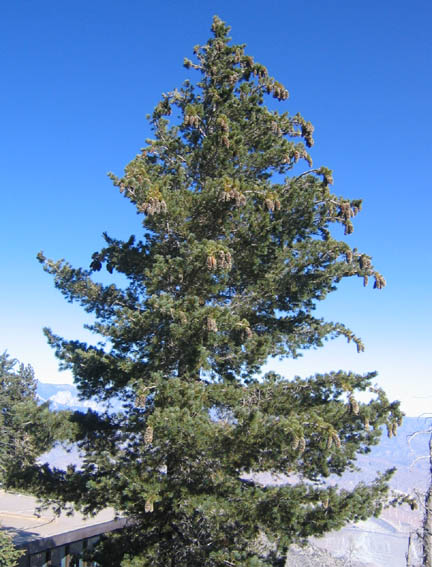
The sugar pine tree, often called the ‘king of the conifers’ is the largest of all pines, growing to a height surpassed only by a few other coniferous trees. It can be found throughout the mountains of the North American Pacific Coast.
Scientific Classification
| Kingdom | Plantae |
| Division | Pinophyta |
| Class | Pinopsida |
| Order | Pinales |
| Family | Pinaceae |
| Genus | Pinus |
| Subgenus | Strobus |
| Scientific Name | Pinus lambertiana |
Quick Information
| Other Names | Sugar cone pine, big sugar pine, great sugar pine, ocote (Spanish), pino de azucar (Spanish) |
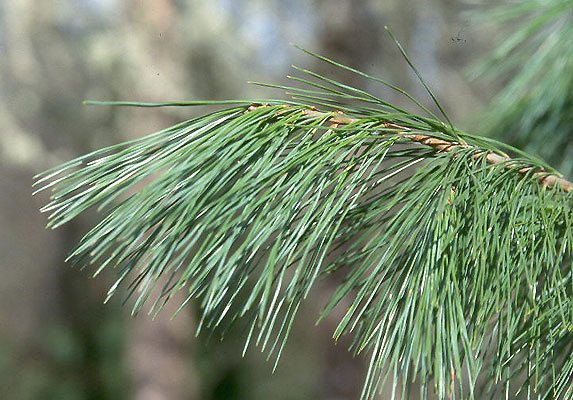
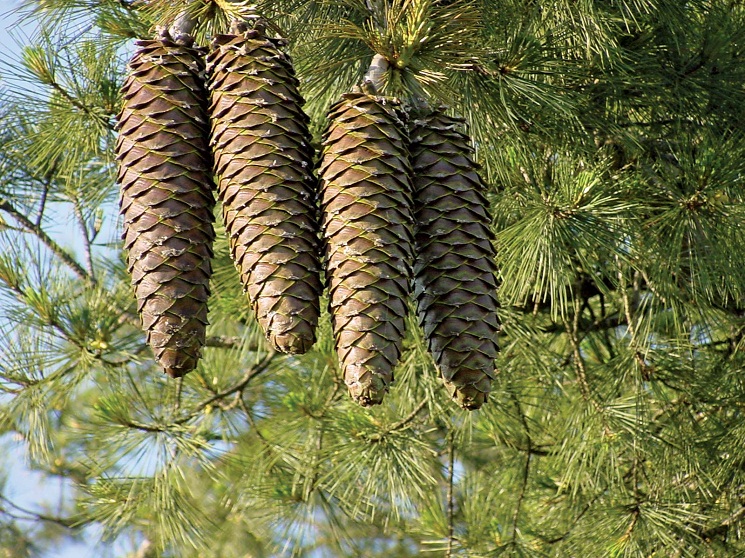
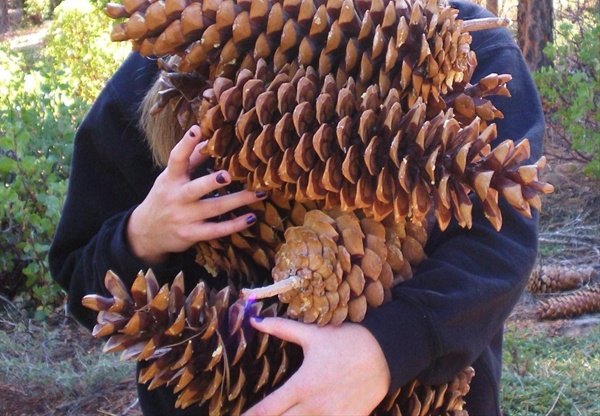
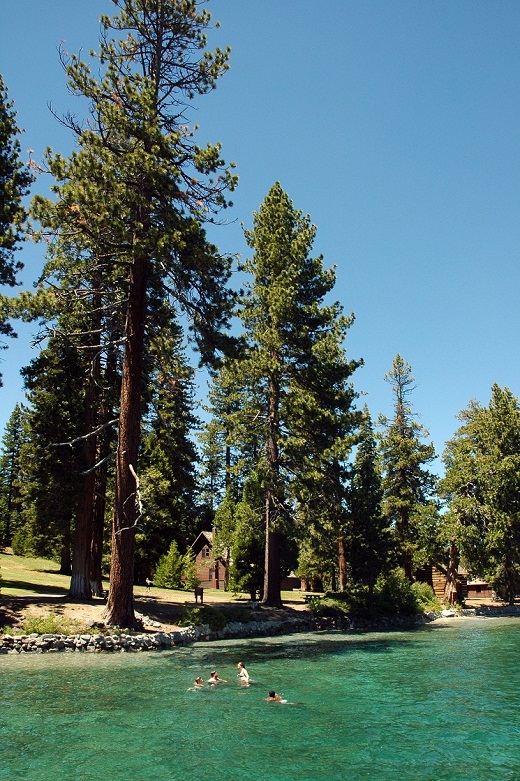
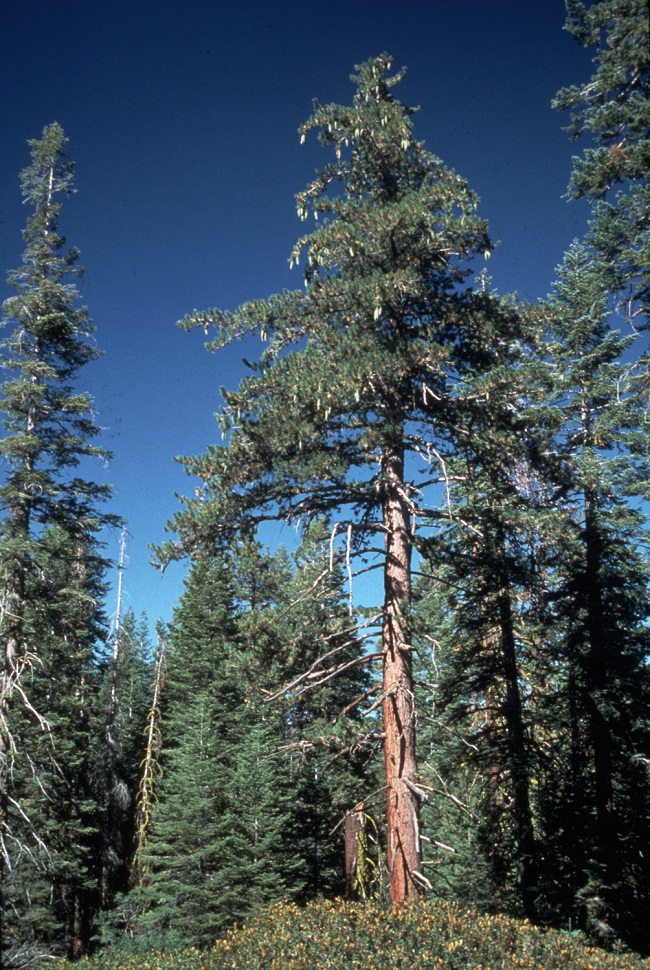
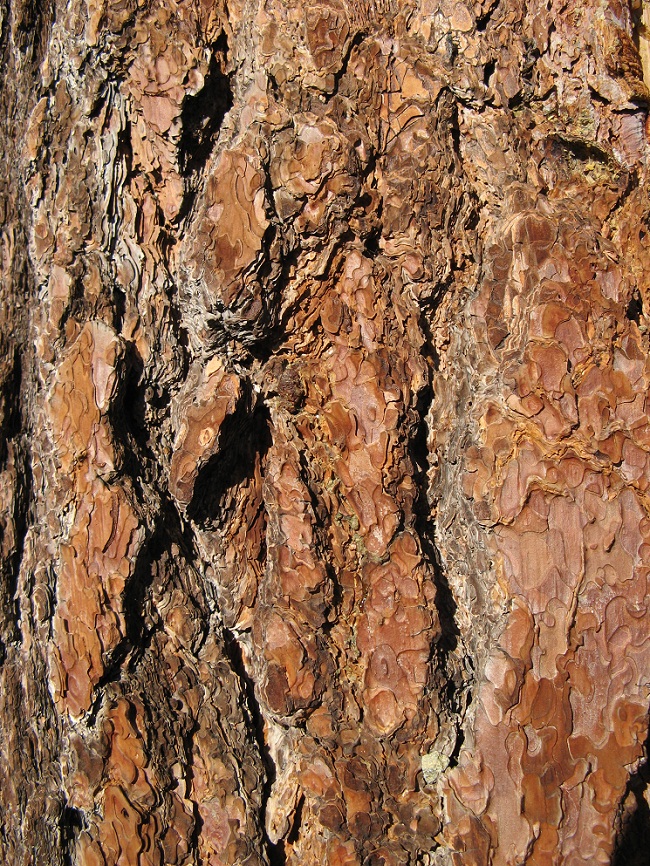
| Identification | Size: 130-195 ft (40-60 m) Trunk Diameter: 59-98 in (1.5-2.5 m) Leaves (Needles): Arranged in bundles of five with a sheath shed annually, 2.25-4.25 inches (5.7-10.8 cm) in length Cones: Longest cones in the world,9.75-19.75 inches (24.8-50 cm) in length, glistening brown-yellow in color Seeds: Obovoid (wedge-shaped), deep brown, 0.39-0.78 in (1-2 cm), with broad wings 0.78-1.18 in (2-3 cm) in length; edible Bark: Fire-resistant |
| Distribution/Range | Mountains of California and Oregon in the United States, Baja California in Mexico |
| Habitat | North and east facing slopes at elevations from sea level to 10,000 ft (3,050 m) |
| Hardiness Zones | Up to 7 |
| Growth Rate | Fast; average yearly growth of 2 ft |
| Lifespan | Typically 400-500 years |
| Growing Conditions | Winter Conditions: Cool, wet winters; temperatures upwards of -28°F (-33°C) Summer Conditions: Warm, dry summers; 5 frost-free months Rainfall: 25-90 in (63.5-228.6 cm) Soil: Coarse or medium textured, well-drained, acidic, moist soil Light Requirement: Sun to partial shade |
| Diseases & Pests | White pine blister rust, Melampsora rust, Lophodermellaarcuata, Phytophthoramegasperma, mountain pine beetle and sugar cone pine beetle |
| Breeding System | Monoecious |
| Propagation | Cuttings, seedlings, bare root and containers |
| Seedling Development | Prone to show signs of dormancy; easily fixed by cold stratification for 60-90 days |
| Wildlife Value | Nesting sites for birds, squirrels, and other small mammals |
| What is it used for | Wood is much sought after in lumber production; Native Americans use the sap to repair canoes; growing bonsai |
| IUCN Conservation Status | Least Concern |
Interesting Facts
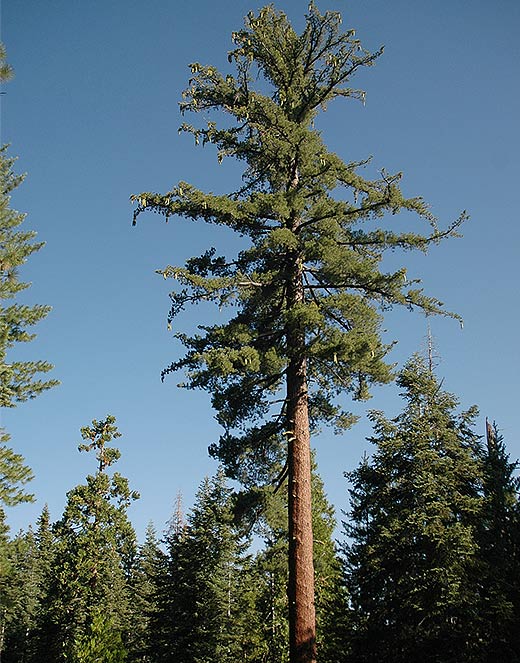
- The tallest sugar pine tree (273.79 ft) was discovered in October 2015, at Yosemite National Park, California by the giant tree hunter Michael Taylor.
- The United States Forest Service is currently involved in a program to develop rust-resistant sugar pine trees.