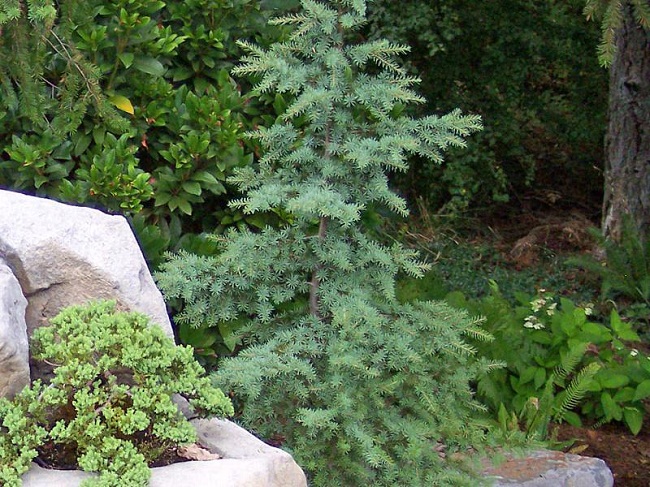
Mountain hemlocks are coniferous trees found across North America’s Pacific Coast.
Hemlock
Hemlock trees are any of the 8-10 species of medium- to large-sized evergreen conifers that belong to the genus Tsuga of the subfamily Abietoideae. These graceful conifers are named hemlock because the smell of their crushed foliage is similar to that of a flowering plant called poison hemlock. However, the members of the genus Tsuga are not poisonous. They have a variety of uses, as they make popular ornamental and timber trees. The hemlock timber is harder and stronger than that of pine.
Scientific Classification | |
| Kingdom | Plantae |
| Clade | Tracheophytes |
| Division | Pinophyta |
| Class | Pinopsida |
| Order | Pinales |
| Family | Pinaceae |
| Subfamily | Abietoideae |
| Genus | Tsuga |
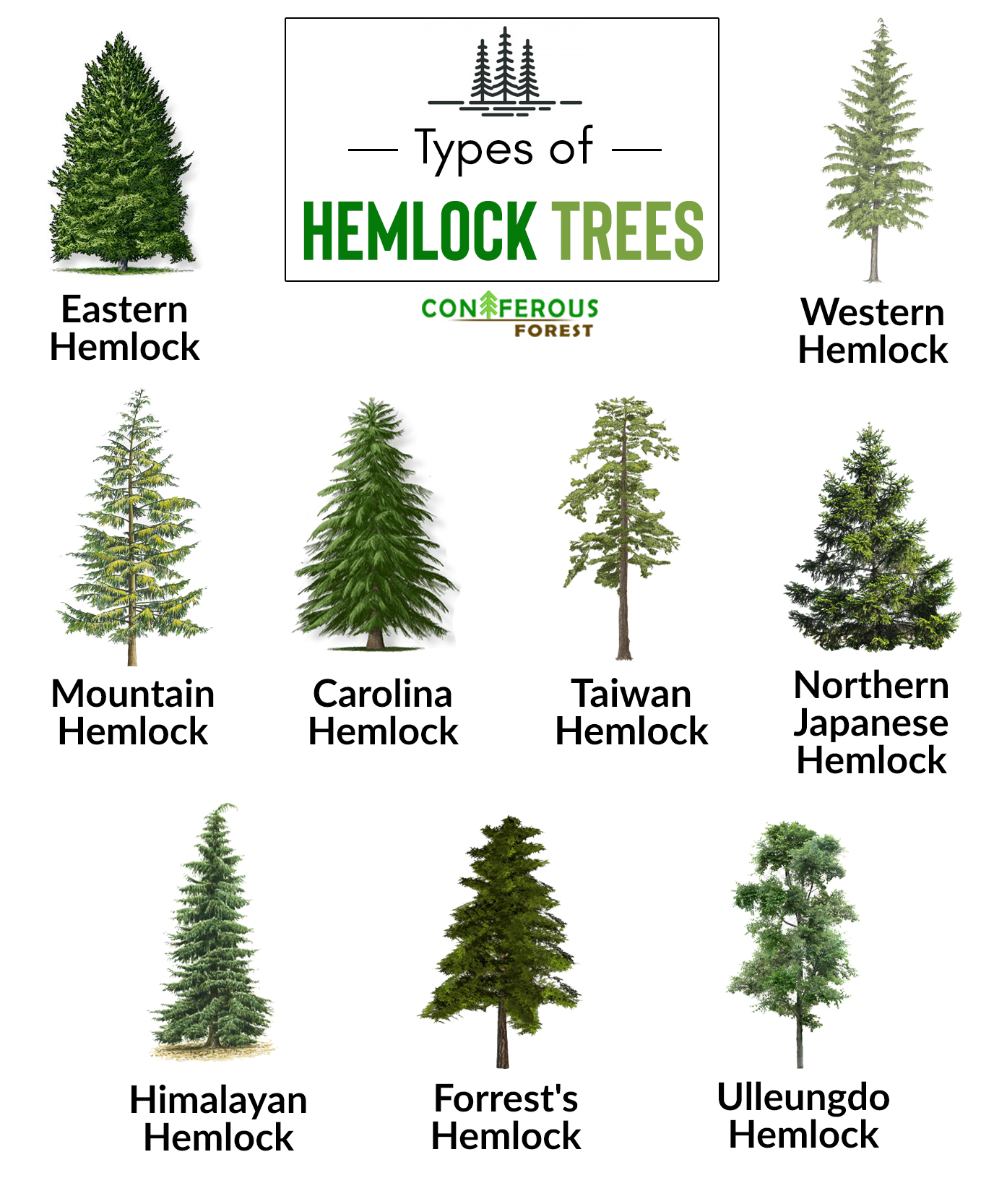
List of Different Types of Hemlock Trees
The genus Tsuga includes the following different species:
- Eastern hemlock (Tsuga canadensis)
- Carolina hemlock (Tsuga caroliniana)
- Taiwan hemlock (Tsuga chinensis)
- Northern Japanese hemlock (Tsuga diversifolia)
- Himalayan hemlock (Tsuga dumosa)
- Forrest’s hemlock (Tsuga forrestii)
- Western hemlock (Tsuga heterophylla)
- Mountain hemlock (Tsuga mertensiana)
- Southern Japanese hemlock (Tsuga sieboldii)
- Ulleungdo hemlock (Tsuga ulleungensis)
There are some plant species that are commonly called hemlock, including water hemlock, ground hemlock, and poison hemlock, but they belong to a different family Apiaceae. There are some conifer species that were previously included in the genus Tsuga, but are now classified under other genera. These include dark-bark spruce, Japanese Douglas-fir, Columbian pine or Douglas fir, bigcone spruce, and bristlecone hemlock.
Quick Information | |
| Tree Type | Evergreen coniferous |
| Identification | Height: 33-197 ft Leaves: Either flattened or slightly angular, 5-35 mm long, 1-3 mm broad, borne singly with spiral arrangement on the stem Trunk Diameter: 4-9 ft on average Bark: Gray to brown, scaly, deeply furrowed Cones: Male cones grow solitary, globose, ovoid, or ellipsoid, yellowish-white to purple, 3-5 mm long, borne on short peduncles; female cones are oblong-cylindric or ovoid globose, 15-80 mm long, borne on a year-old twig Seeds: Small (2-4 mm long), winged (wings being 8-12 mm in length) Branches: Horizontal, form flattened sprays, bending downward towards the tips Crown: Usually conical, some Asian species have irregular shape |
| Distribution | North America, Central and Eastern parts of Asia |
| Habitat | Cool, moist temperate regions that receive high rainfall, with minimal water stress |
| USDA Hardiness Zone | 3 to 8 |
| Growth Rate | Slow to medium, 12-24 inches per year |
| Lifespan | Usually ranges from 800 to 900 years |
| Growing Conditions | Sunlight: Prefers partial shade, can grow in direct sun Soil: Moist, acidic, well-drained Water: A fair amount; requires frequent watering when young and during dry weather |
| Drought Tolerance | Poor; does not do well in the heat |
| Diseases & Pests | Diseases include cytospora canker, cone rust, twig rust, needle rust, fabrella needle blight, root rot; common pests include hemlock woolly adelgid and elongate hemlock scale |
| Reproductive System | Monoecious |
| Propagation | By seeds, stem cuttings, grafting |
| Wildlife Value | Provides habitat for wildlife including obligate birds and canopy arthropod species, used as winter cover by animals like moose, deer, porcupines, and grouse, offers food sources for these animals |
| Uses | As wood pulp in the timber industry, bark is useful for tanning leather, cultivars are used for decorating gardens, needles are used for producing tea and perfume |
| IUCN Conservation Status | Two common species such as the Eastern Hemlock and Western Hemlock are listed as near threatened and least concern respectively |
Interesting Facts
- The needles of hemlock are rich in Vitamin C. They are used for making tea.
- Hemlocks help keep drinking water clean and cool. Their branching root systems filter agricultural wastes, keeping water clean along water bodies and stream corridors.
References
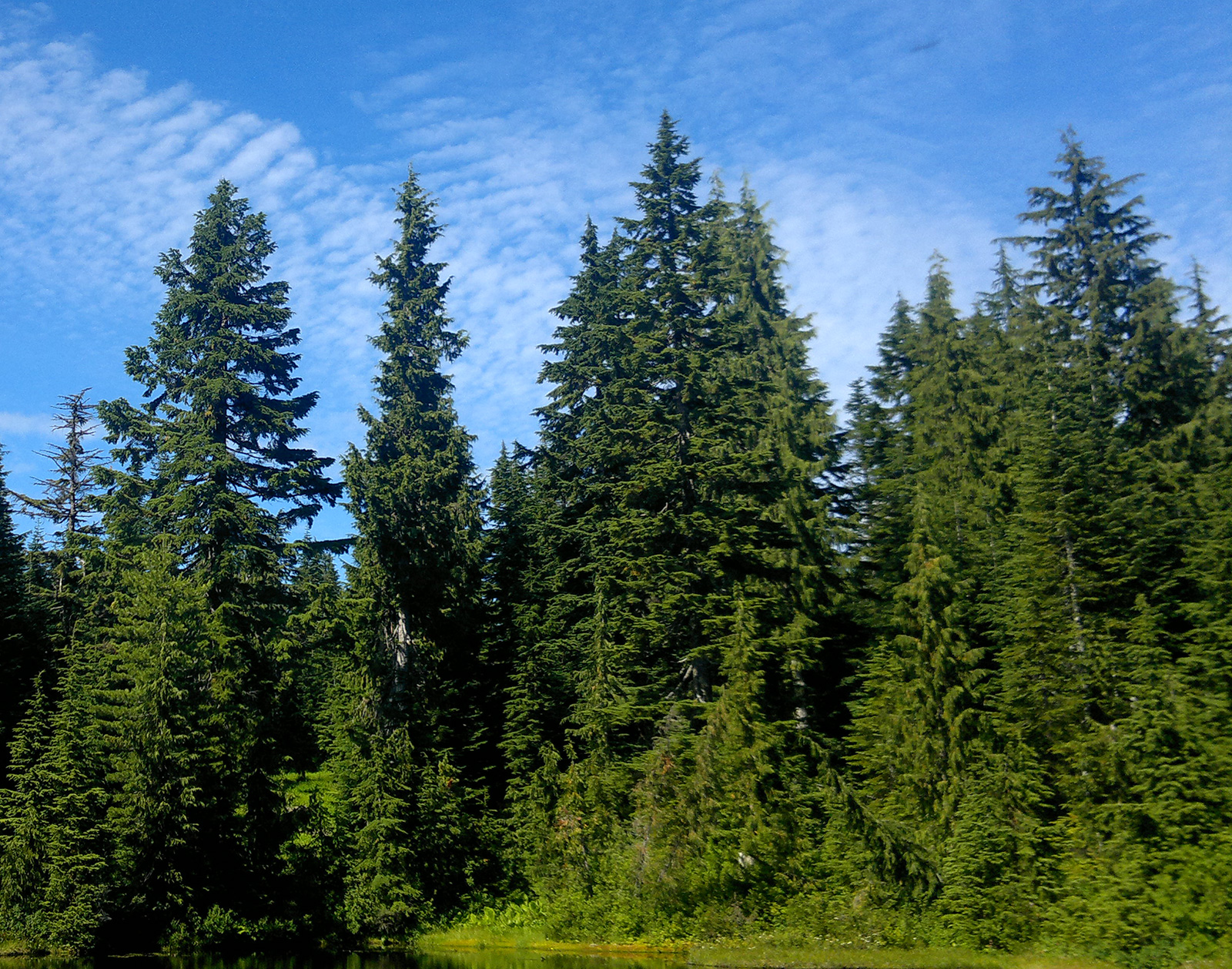
Western Hemlock
Known for its durable timber, the western hemlock is a species of large conifers found in the western coastal regions of North America. It is the dominant climax species in the forests west of the Pacific Coast Ranges.
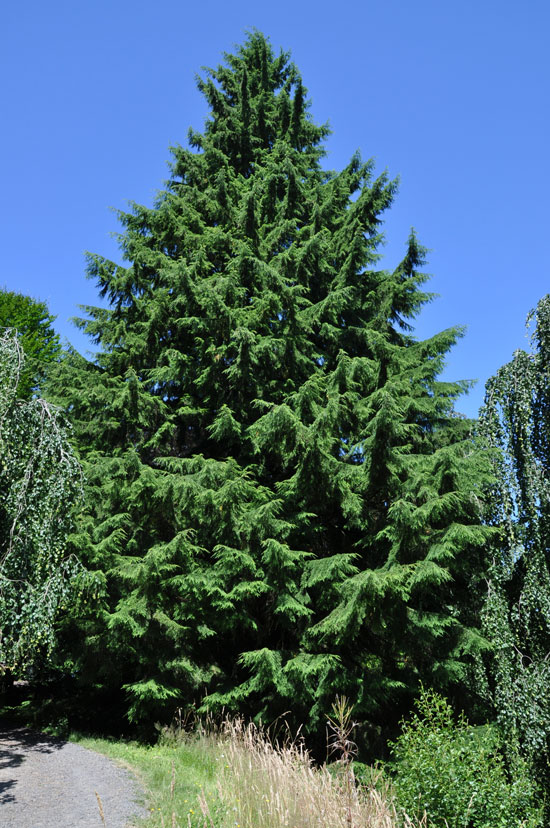
Eastern Hemlock (Canadian Hemlock)
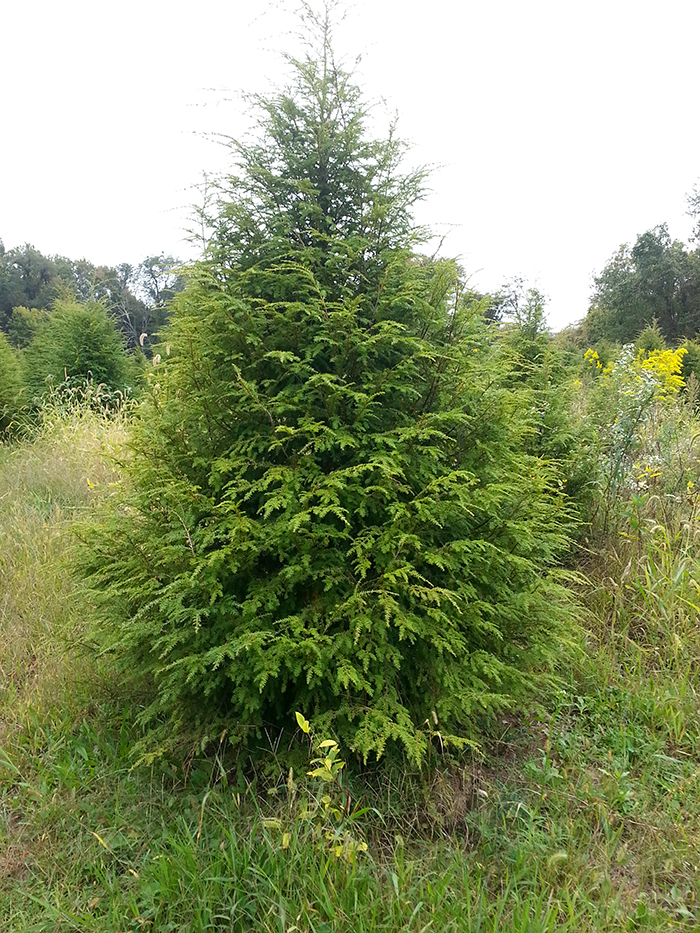
Eastern hemlock is a species of conifers found across eastern North America at elevations of 600-1800 meters (2,000-5,900 feet).