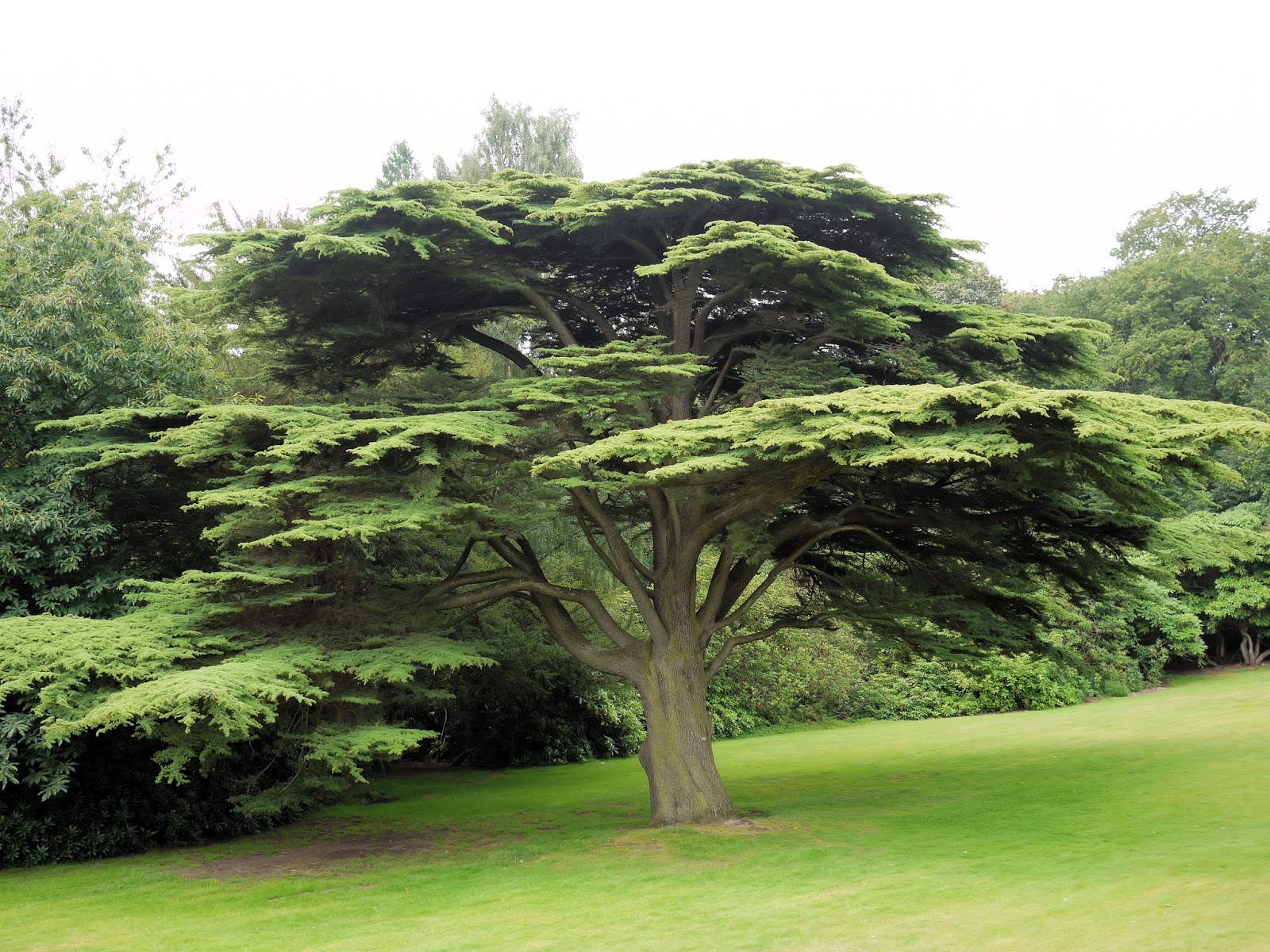
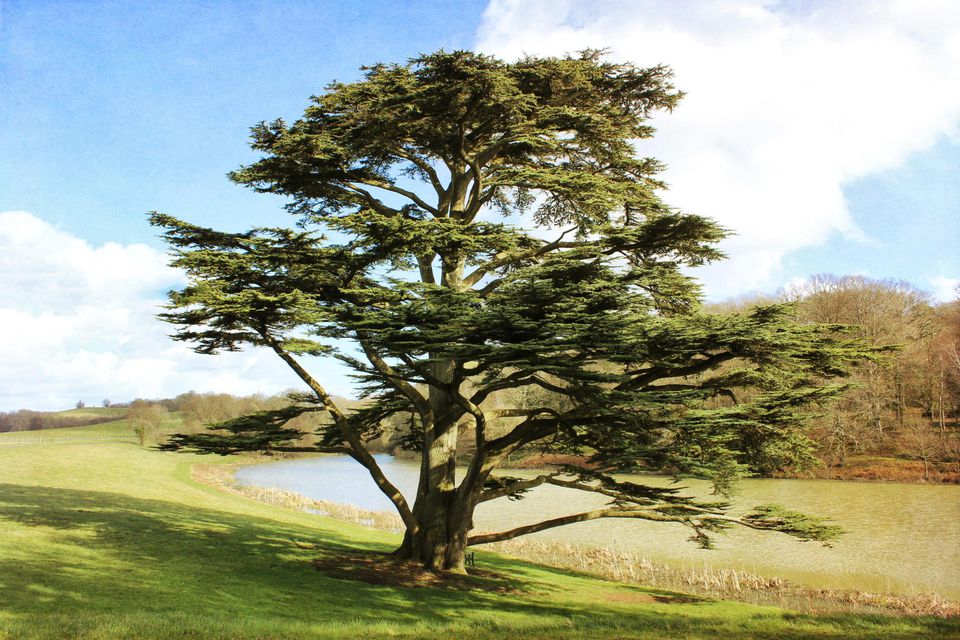
The cedar of Lebanon, also known as Lebanon cedar, is a species of tall coniferous trees characterized by large, irregularly shaped heads with spreading branches. It belongs to the Cedrus genus of the Pinaceae family. This cedar species typically grows in the mountainous regions of the Eastern Mediterranean. In Middle Eastern culture, it has great historical and religious significance and has been cited several times in ancient literature.
Cedar
Cedar is any of the species of tall ornamental conifers that belong to the family Pinaceae, found in the mountainous regions of the Mediterranean Basin and Western Himalayas. These trees are commonly used for decorating gardens and designing landscapes, thriving in temperate zones where the temperature does not fall below -25 °C in the winter.
Scientific Classification | |
| Kingdom | Plantae |
| Clade | Tracheophytes |
| Division | Pinophyta |
| Class | Pinopsida |
| Order | Pinales |
| Family | Pinaceae |
| Subfamily | Abietoideae |
| Genus | Cedrus |
List of Different Types of Cedar Trees
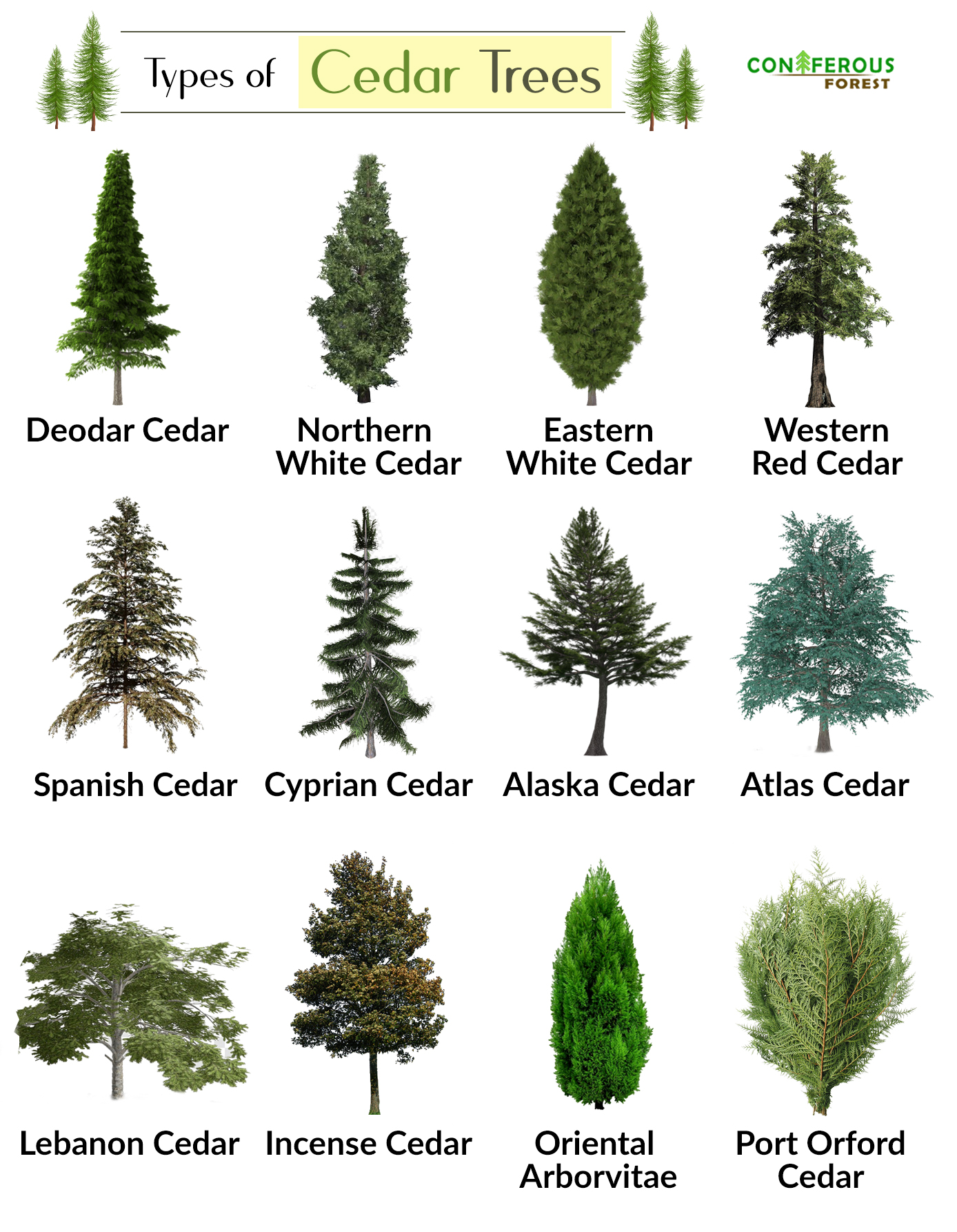
The Cedrus genus is categorized into four different species, including:
- Atlas cedar (Cedrus atlantica)
- Cyprus cedar (Cedrus brevifolia)
- Deodar cedar (Cedrus deodara)
- Lebanon cedar (Cedrus libani)
Apart from these ‘true’ cedars, some groups of trees and plants are also commonly described as a cedar in the US. These ‘false’ cedars are categorized into several families including Cupressaceae, Meliaceae, Surianaceae, Lycopodiopsida, Cephalotaxaceae, Caryophyllaceae, and Bignoniaceae. Some of the different types of ‘false’ cedar species that are commonly observed include conifers and flowering trees.
Conifers include Bermuda cedar (Juniperus bermudiana), Atlantic white cedar (Chamaecyparis thyoides), eastern red cedar (Juniperus virginiana), Japanese cedar (Cryptomeria japonica), eastern white cedar or northern white cedar (Thuja occidentalis), mountain cedar (Juniperus ashei), western red cedar (Thuja plicata), and port orford cedar (Chamaecyparis lawsoniana).
Quick Information | |
| Tree Type | Evergreen coniferous |
| Identification | Height: 98-130 ft (occasionally 197 ft) Leaves: Needle-like, arranged in open spiral form, 8-60 mm long Trunk Diameter: About 8-10 ft (2.5-3 m) Bark: Square-cracked or thick ridged Cones: Barrel-shaped, 3-8 cm broad, 6-12 cm long Seeds: 10-15 mm long, with wing-size of 20-30 mm Branches: Broad, horizontal Crown: Conical when young, broad and flat when fully grown Pollen cones: Slender, oval-shaped, 3-8 cm long |
| Distribution | Southern and South-Eastern Mediterranean, Western Himalayas |
| Habitat | Mediterranean: 1,000-2,200 m Himalayas: 1,500-3,200 m |
| USDA Hardiness Zone | 2-9 |
| Growth Rate | Moderate to high |
| Lifespan | 100-150 years, some can live up to 300 years |
| Growing Conditions | Sunlight: Prefers full sun to partial shade Soil: Slightly burned or tilled, well-drained, moist Water: 1 inch per week in dry seasons |
| Drought Tolerance | Moderate |
| Diseases & Pests | Seiridium canker, keithia blight, cedar apple rust or orange ball fungus, cedar quince rust, cedar hawthorn rust, gray mold, armillaria root rot, defoliation by bagworms |
| Reproductive System | Monoecious |
| Propagation | Through stem cuttings |
| Wildlife Value | Stems and roots of seedlings are consumed by the larvae of turnip moth and pine processionary; several bird and mammal species eat cedar berries |
| Cultivars | 1.Glauca Pendula 2.Argentea Fastigiata 3.Roman Gold 4.Emerald Falls Pendula 5.Curly Locks 6.Green Prince 7.Stenocoma |
| Uses | Cedar oil and wood are natural moth repellents, used for making shoe trees, developing a bonsai tree |
| IUCN Conservation Status | 34 percent of the conifers including cedars are now on the brink of extinction |
Interesting Facts
- Only the male cedar trees yield pollens. The females, on the other hand, yield berries containing seeds.
- Although some species of true cedars are acclimatized and found in the US, none of the species are native.
- As a defensive adaptation against squirrel predation, the seeds of cedar consist of two or three blisters, which contain a bad-tasting resin.
- Even though they are not even conifers, some flowering plants and trees are still commonly called cedars. These include Spanish cedar, Ceylon cedar, and bay cedars.
References
Deodar Cedar
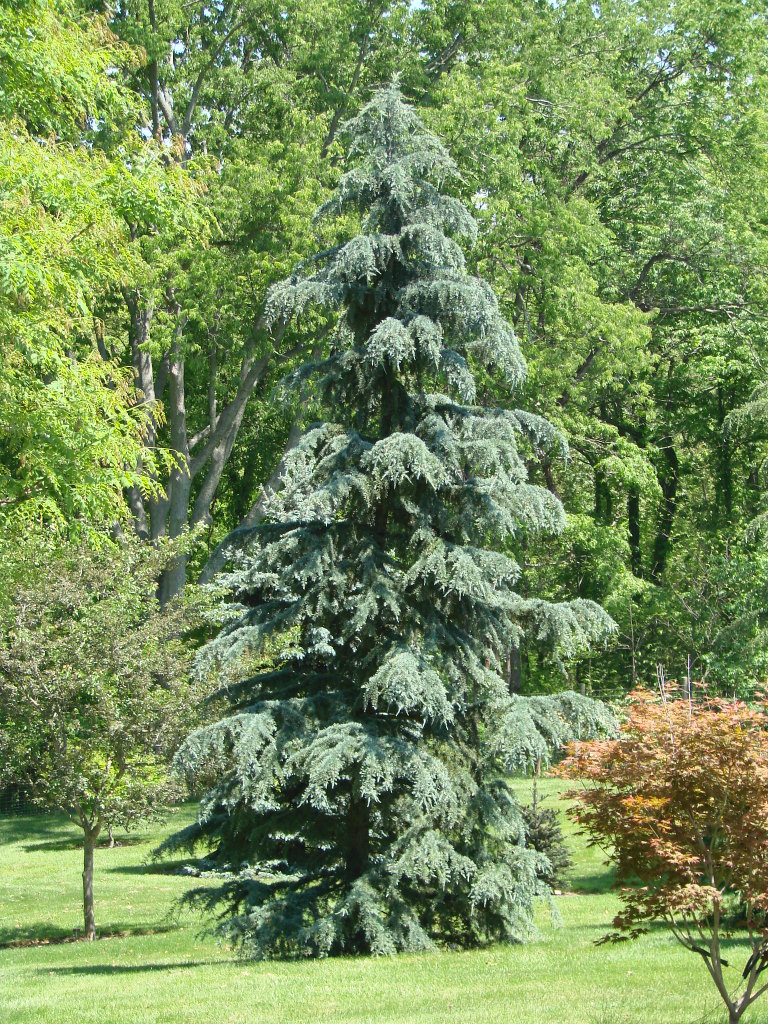
Deodar cedar, sometimes referred to as the California Christmas tree, is a speciesof conifer occurring in the western Himalayas at an altitude of around 1,500 to 3,200 m.The tree is graceful with pendulous branches and comes in attractive coloring, ideally suited for use in landscaping.
Atlas Cedar
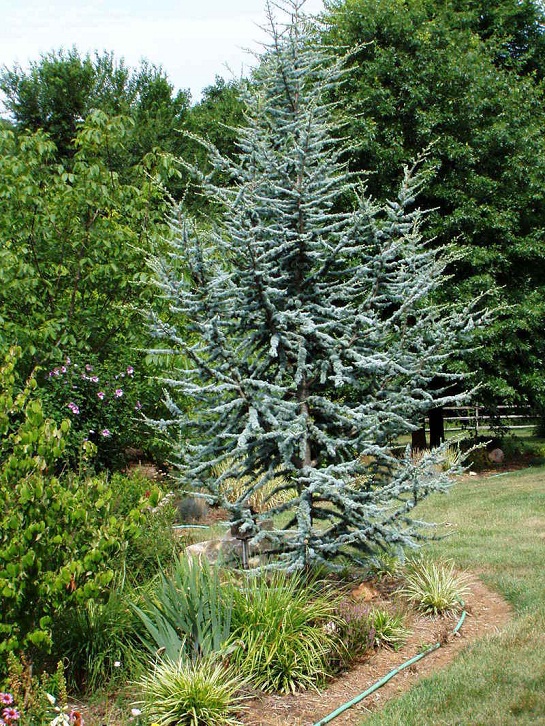
Atlas Cedar is a species of picturesque coniferous tree found in the Atlas Mountain Range of Morocco and Algeria at an altitude of 1,370-2,200m. It has a loose pyramidal form when young, and its striking green or bluish-green foliage, along with its long branches, spread rapidly, becoming flat-topped with age. When given enough room to grow freely, it can reach up to a height of 40m, and its crown can spread up to 12m.
Port Orford Cedar
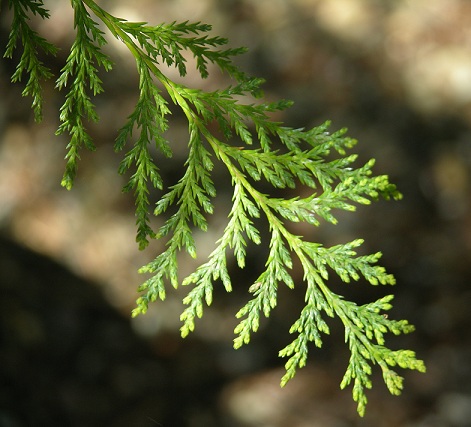
Port Orford Cedar, widely known for its quality of wood and horticultural uses, is a conifer native to northwest California and southwest Oregon. It is found at an elevation of 4,900 ft (1,500 m) in the valleys of Klamath River.