
The North American woodpecker is a sexually dimorphic species. Primarily foraging on burnt-forests, the woodpecker prefers open woodlands for nesting and thriving.
Coniferous Forest Animals
Introduction to Animals in the Coniferous Forest
Despite the often-harsh climates and relatively sparse vegetation, the coniferous forest range is home to countless invertebrates, small and big land animals as well as birds. All the species living here has distinct food habits and special adaptations that enable them to survive.
Some grow thick winter coats to stay warm and move even in deep snow, while others hibernate. Most birds living in these regions are migratory, so, they fly to warmer regions to escape the chilly winters.

Insects of the Coniferous Forest |
| Pine Beetle |
Eastern Gray Squirrel

Eastern gray squirrels are a secretive species popular for their discrete behavior, especially when it comes to food. These tree squirrels do not hibernate.
Bohemian Waxwing

The bohemian waxwing is a passerine bird. Due to its waxy feather and wandering nature, the bird has been named as such.
Douglas Squirrel

The loud squirrel is an attentive and agile species. They have cute tuft around the ears during the winter.
Northern Goshawk

The raptor bird, being a large predator, is known for its size. The male goshawk is smaller than the female.
Bighorn Sheep

The bighorn sheep, covered with wools, is known for its signature horns. The sturdy and strong horns are curled and twisted.
Eastern Milk Snake

The eastern milk snake is a non-venomous subspecies of milksnake. The calm snake is a popular name in the pet trade.

Western Terrestrial Garter Snake

The medium-sized snake is basically terrestrial, but at times it becomes semi-aquatic. This is a North American snake that is venomous, but that is not detrimental for people. The venom can immobilize small preys only, that helps the snake swallow them. Unless extremely threatened, the snake doesn’t bite humans.
Snow Goose

The migratory bird is known for its snow-like color that gets it’s the name. There are usually two color morphs of the species and the birds belonging to different morphs often crossbreed with each other. The otherwise carnivorous bird sometimes consumes larvae of flies during its initial days post-hatching.
Snowshoe Hare

Found in the Alpine region, the snowshoe hare is an interesting animal as it changes color according to the season. Either stays in groups or alone, the hare populates rapidly.
Ruffed Grouse

The non-migratory bird has a beautiful look, due to its colorations and patterns on the body. It is widely hunted and that is a tradition at some parts of the world.

White-winged Crossbill

The white-winged crossbill belongs to the finch family. Usually, it is smaller than some of its cousins, and the juvenile bird is more similar to other adult crossbills.
Short-eared Owl

The short-eared owl, colloquially the small or little eared owl, has earned its name due to its tuffet of feathers resembling two short ears. The dimorphic species has a round and large head. It is different than the long-eared owl which has long ear-like feathers.
Spotted Owl

The medium-sized spotted owl is known for its appearance and hence the name. The species is facing habitat loss to a mentionable extent due to deforestation.
Snow Bunting
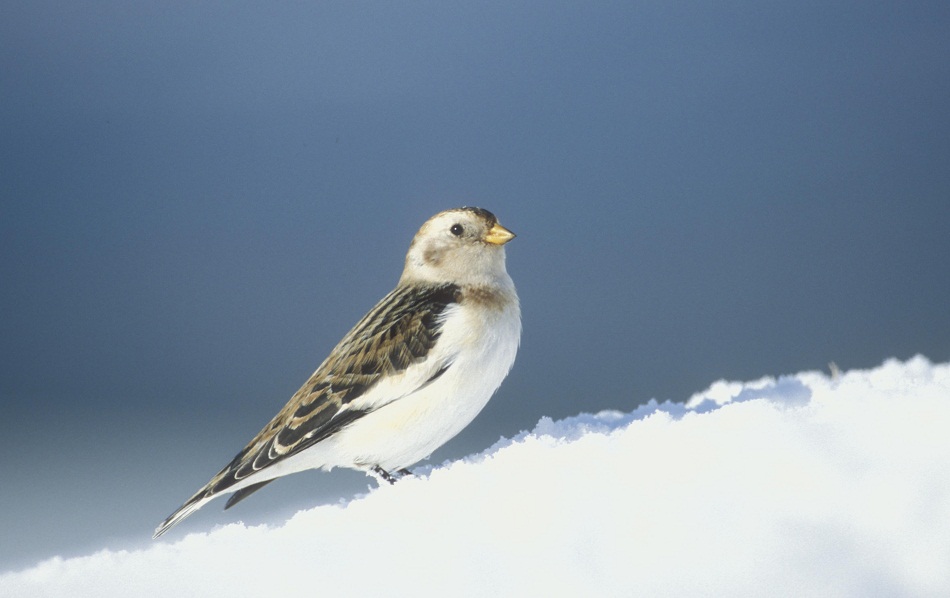
The snow bunting, as the name suggests, is a winter bird. The migratory bird has crossed with other species like Lapland bunting.
Tibetan Wolf

The Tibetan wolf is one of the 38 subspecies of gray wolf and is often considered to be the same as the

Cassin’s Finch

The Cassin’s finch, a North American bird is named after the curator of Philadelphia Academy of Natural Sciences, Mr. John Cassin. The species is often found at higher altitudes.
Harlequin Duck

The Harlequin duck is one of the most beautiful sea ducks of the world, due to its robust coloration. Females are always paler than males.
Purple Finch

Purple finches are north American medium-sized birds and mostly confused with house finches. Earlier the species was grouped with rose finches but now there are clear differences in regards to their family.
Brush Rabbit

Brush rabbits are North American species and they are solitary by nature. Because of their agility and apparent timid behavior the species is a prominent name in the pet trade.
American Mink

American minks are carnivore animals, equally active at both land and water. They are farmed to a mentionable extent because of their glossy fur.
Yellow Anaconda

One of the four species of anaconda, yellow anaconda is a large snake common in South American regions. Their appearance and temperament are the main reasons that many zoo authorities keep them as exhibits. They are dangerous when intimidated by humans encounter.
Pine Siskin

Pine siskins are migratory finches, known for their conspicuous streaks and slender bills which separate them from American sparrows and other similar sized finches. With an outstanding power to thrive in the winter, these North American birds often fly in groups.
Pine Snake

Pine snakes are heavily-built, non-venomous, colubrid snake found near Southeastern US. Although not poisonous, bites from a pine snake are sure to hurt.
Bearded Vulture

Bearded vultures are one of the largest old world vultures found in Asia, Europe, and Africa. Its population, although widespread, has been in decline because of overhunting across most of its range.
Boreal Owl

Boreal owls are small owls found throughout the Holarctic region. They are members of the typical owls group, as opposed to the barn owl grouping.
Kermode Bear

Kermode bears are a subspecies of the American black bear found in coastal British Columbia. They are named after Frank Kermode, a Royal B.C. Museum former director.
Arctic Shrew

Arctic shrews can be found in the northern US and through most of Canada. Their populations are abundant through most of their range, thus negating the risk of extinction.
Abert’s Squirrel

Abert’s squirrels are found sporadically throughout the Rocky Mountains, from Arizona to Mexico. They are named in honor of Col. John James Abert, an American soldier, and naturalist.
American Wigeon

American wigeons are dabbling ducks found in the Americas. They belong to the same family as the gadwall, falcated teal, Chiloe wigeon, and Eurasian wigeon.
North American Beaver

North American beavers are the second largest rodents in the world (after the capybara) and the largest in North America. It is one of the two extant beaver species, the other being the Eurasian beaver. Neither of these two species is closely related to the mountain beaver, also found in North America.
Black-tailed Deer

Black-tailed deer are a member of the mule deer family and found across the Pacific Northwest of North America.
Dusky Grouse

Dusky grouse is the second largest grouse in the US after the sage grouse. They have a wide distribution, and their population numbers are holding their own for the last few decades.
Red-Cockaded Woodpecker

Red-cockaded woodpeckers are birds found exclusively in pine forests, especially ones with an abundance of longleaf pines.
Himalayan Brown Bear

The Himalayan brown bear is a species of brown bear found in the Northern Himalayan mountain ranges. It is the largest carnivore in its habitat. Its population numbers have been on a constant downswing because of loss of habitat. Human persecution for their claws and fur is another important reason behind this bear’s falling numbers.
Rock Ptarmigan

Rock ptarmigans (pronounced tar-mi-gun) are members of the grouse family inhabiting a vast area around the Arctic pole. They are considered a game bird and hunted by the human population for entertainment and food.
Himalayan Tahr

Essentially a wild goat, the Himalayan tahr is an ungulate found throughout the Himalayas and in places where it has been introduced. They are highly adapted to survive in the cold climates they inhabit.
Yellow-Bellied Marmot

Yellow-bellied marmot is a species of small- to medium-sized rodents inhabiting the mountainous regions of southwestern Canada and the western United States, including Mount Rainier, Sierra Nevada, and the Rocky Mountains. Found at an elevation of about 6,500 ft, the marmots dig burrows in the ground where they live in colonies.
Northern Saw-Whet Owl

Northern saw-whet owls are small birds found in North America. They are the smallest owl found in the east of the continent. They are successful hunters at night but spend the day being rather inconspicuous. Their broad range of distribution ensures its population’s security for some time to come.
Wood Thrush

The wood thrush is medium-sized bird native to North America. It is a close relative of the American Robin and the other thrushes.

Alaskan Wood Frog

The Alaskan wood frog is one of the most widely distributed amphibians in North America, especially in Alaska, the colder parts of Canada, and the contagious United States.
Northern Spotted Owl

The Northern Spotted Owl, one of the three subspecies of spotted owls, is a western North American bird with a barred tail and spotted head.
Mexican Spotted Owl

Mexican spotted owl is a subspecies of spotted owl occurring in the United States and Mexico. Although the smallest among the spotted owls, it is one of the largest owls found in North America.
Alpine Ibex

Alpine ibex is a wild goat that inhabits the European Alps, occurring at an elevation of 5,900 to 10,800 ft. Although the herbivorous species was extirpated from most of its historical range, it was successfully reintroduced to those regions. All living individuals today are descendants of the stock from Gran Paradiso National Park in Italy and Maurienne valley in France.
Rough-Skinned Newt

The rough-skinned newt is a small salamander found in North America, well known for its powerful poison.
Tundra Wolf

Tundra wolf is one of the largest among the subspecies of gray wolves occurring in Eurasia from Finland to Kamchatka Peninsula. Although the carnivorous subspecies is under threat, it is still hunted for its fur.
Deer Mouse

Deer mice are small, white footed rodents that are quite prevalent in North America. Although deer mouse is the common name given to Peromyscusmaniculatus, most species belonging to the genus Peromyscus are generally referred to as the deer mouse. These tiny mammals are a concern since they are the carriers of Lyme disease and Hantavirus, which are deadly to humans.
Ringneck Snake

The ringneck snake is a species of slender, mildly poisonous snakes commonly found in southeastern Canada, central Mexico, and many parts of the US. Their small stature, nonaggressive nature, and rear-facing fangs do not pose much threat to the humans. Females are comparatively larger while having shorter tails than the males.
Siberian Chipmunk

Siberian chipmunk is a species of rodents native to northern Asia. The omnivorous species was introduced in Europe as pets in the 1960s, and now it is available in many European countries.
Pine Marten

The pine marten is a slim, agile animal native to the deciduous and coniferous forests across Central and Northern Europe as well as some parts of Asia. This elusive creature is characterized by a soft, silky fur and long, bushy tail, with the males slightly larger as compared to the female pine martens.
Dall Sheep

Dall sheep, named after the American naturalist Mr. William Healey Dall, is an ungulate found in the Northwest of North America. The most striking feature is the massive curly horns in the males that add to its ornamentation. Females, on the other hand, have inconspicuous horns. The age rings on the horns, also known as annuli, are used in aging an individual.
Siberian Musk Deer

The Siberian musk deer is a species of small, stocky musk deer living in the forested mountainous regions of Northeast Asia. With a kangaroo-like face, long, muscular hind legs, shorter and weaker forelimbs, small chest, highly arched back, and large rear, these animals move in a sequence of coordinated jumps. Unlike other deer species, the male Siberian musk deer do not have antlers but grow fangs during the breeding season.
Red Crossbill

Red Crossbills are small passerine birds, belonging to the finch family, found in North America, Europe and Asia. Although these small birds possess distinctive crossed bills, they exhibit variations geographically in terms of vocalization as well as size and shape of the bill.
Rubber Boa

The rubber boa snake could not have been given a more appropriate name as its loose and wrinkly skin does give the feeling that it is made of rubber. One of the earliest of the boa species, even older than the much larger boa constrictor, this small reptile is found widely across North America.
Pine Beetle

The pine beetle is a member of the subfamily of bark beetles infesting the trees in North American forests. The aggressive tree-killing insects live primarily in pine trees of all vigor quality and ages. Group killing may occur in dense, pure, and even-aged pine stands or among clusters of pine in mixed-conifer stands. An epidemic may cause depletion of timber supplies and increase the danger of forest fire.
Eurasian Wolf

The Eurasian wolf, as the name suggests, is a canid subspecies found across Europe and Asia. It is a carnivore that has largely had its population cut down during various periods of history, but currently, conservation efforts have ensured that it thrives across the range that it inhabits. Its numbers are believed to be generally stable.