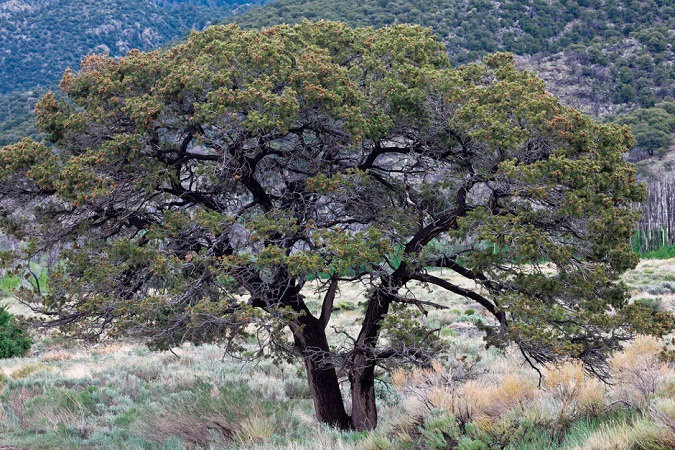
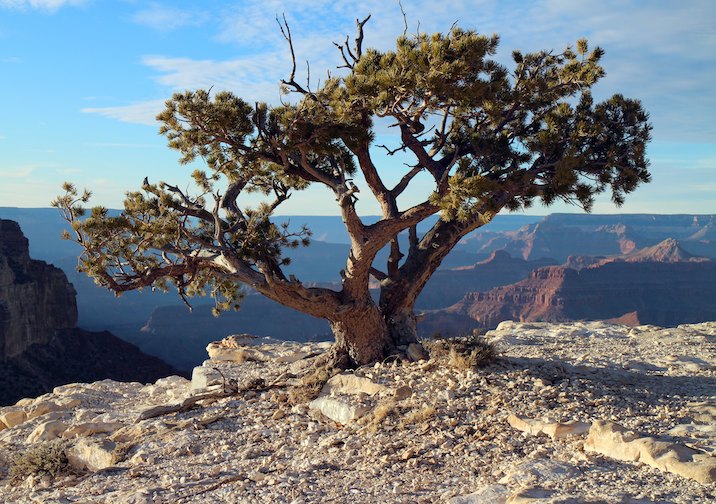
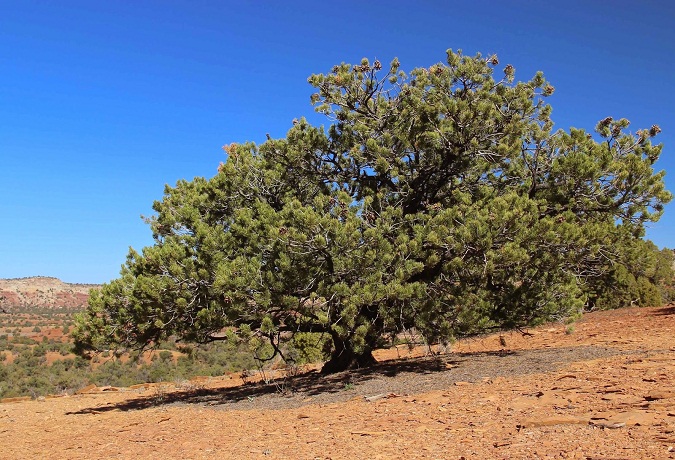
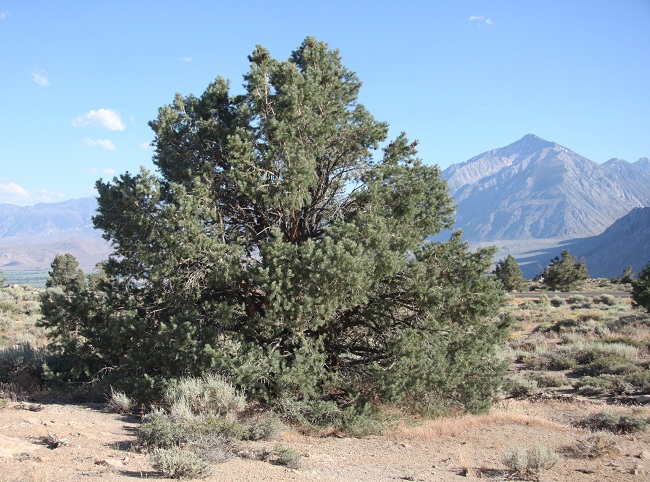
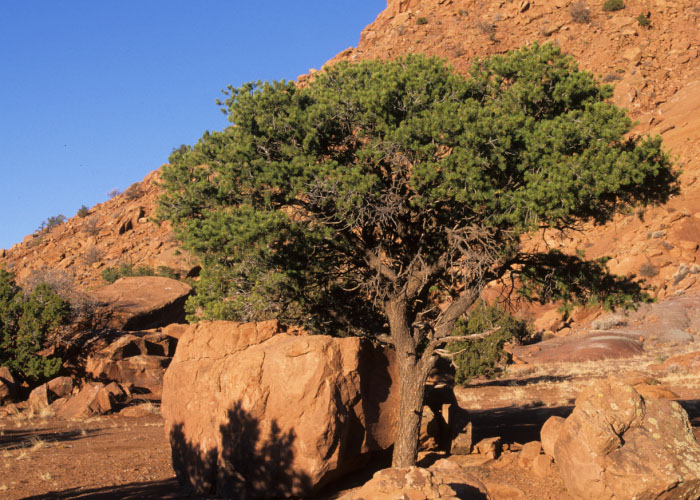
Pinyon or Piñon is a species of small to medium-sized pine trees growing at an altitude of 1,400-3,000 m. As a drought-resistant tree, the Pinyon intermixes with junipers and dominates the forests of the semi-desert regions in the southwestern US.
Scientific Classification
| Kingdom | Plantae |
| Division | Pinophyta |
| Class | Pinopsida |
| Order | Pinales |
| Family | Pinaceae |
| Genus | Pinus |
| Subgenus | Ducampopinus |
| Scientific Name | Pinus edulis |
Quick Information
| Other Names | Colorado pinyon, two-leaf pinyon, two-needle pinyon, nut pine |
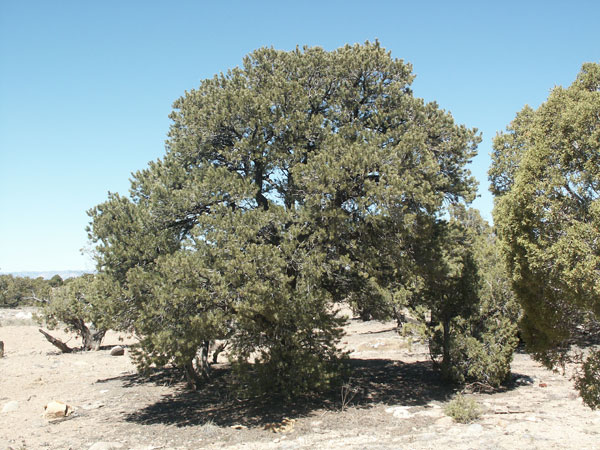
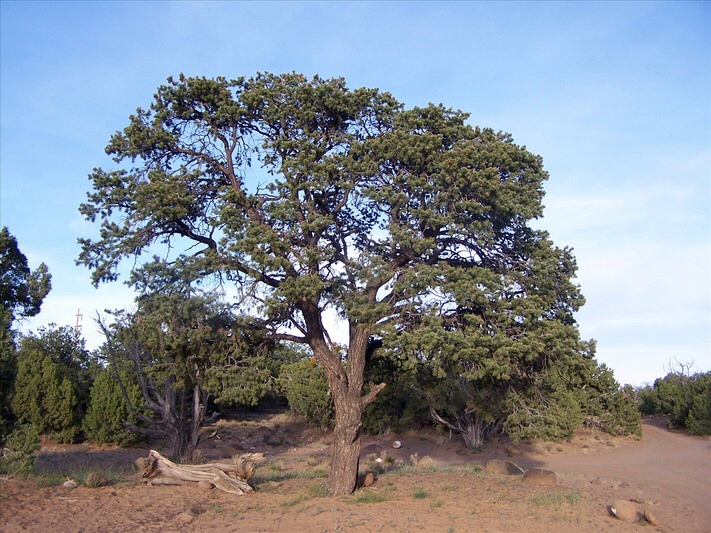
| Size | 33-66 ft (10-20 m) tall; trunk diameter of 31 in (80 cm) |
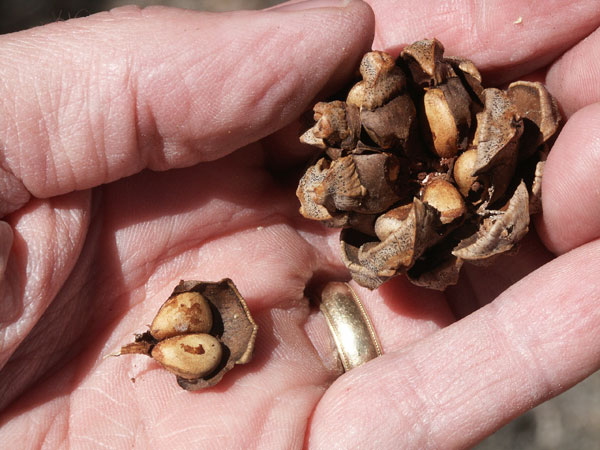
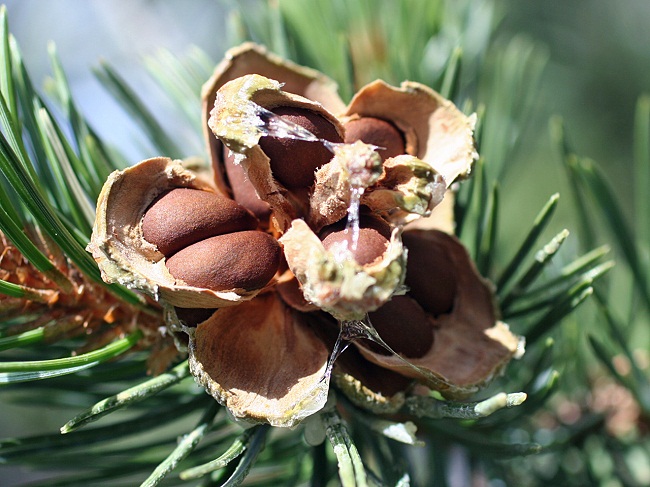
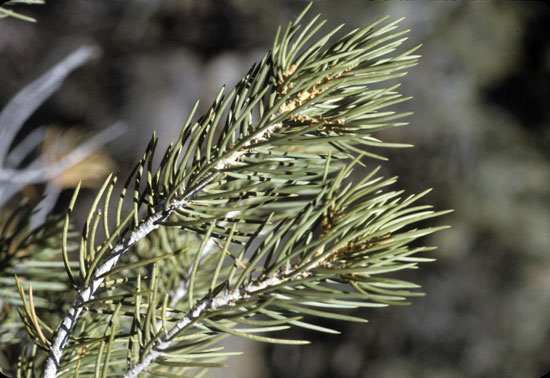
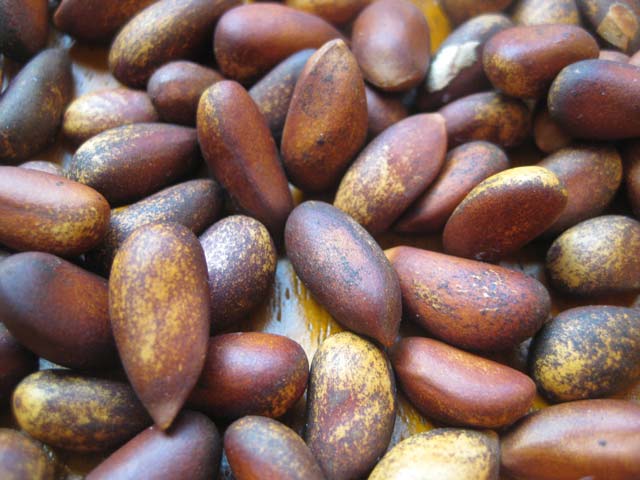
| Identification | Leaves (Needles): Green, 1.2-2.2 inches long, occur in pairs, moderately stiff, stomata on both the outer and inner surfaces Cones: Egg-shaped, 1.5-2 inches long, reddish-brown, scales are few and not covered with prickles; thin-shelled, edible, large and wingless seeds Bark: Reddish brown, thin, scaly, rough |
| Tree Type | Evergreen |
| Distribution/Range | Southern Wyoming, Colorado, New Mexico, northern Arizona, Utah, California, Oklahoma, the Guadalupe Mountains in Texas |
| Hardiness Zones | 4-8 |
| Growth Rate | Slow; approximately 4 inches per year |
| Lifespan | Long-lived; up to 1000 years |
| Growing Conditions | Winter Conditions: Cold, mean January temperatures vary between -10° to 6° C (14° to 43° F) Summer Conditions: Hot, mean July temperatures range from 20°-27° C (68°-81° F) Rain: From 250-560 mm per year Sunlight: Full sun, shade intolerant Soil Requirements: Rocky, low in fertility, well-drained soils with sandstone, granite, limestone, basalt, shale, and mixed alluvium |
| Diseases and Pests | Red-ring rot, root rots, brown cubical rot; stem diseases such as pinyon dwarf mistletoe and pinyon blister rust; needle rusts, needle casts, and other foliage diseases; insects including mountain pine beetle, pinyon-pitch nodule moth, tiger moth, adelgid, pinyon sawfly, pinyon ips, pinyon cone beetle, etc. |
| Flowering/Fruiting | Winter buds with strobili are fully formed by October in the first year; staminate cones mature while the ovulate cones become capable of receiving pollens by mid-June the following year, pollination ends in June; fertilization takes place in July of the third year |
| Breeding System | Monoecious |
| Seed Production | Produced when it is 75-100 years old |
| Seedling Development | Germination of seeds occurs in the spring and summer after dispersal; seedlings grow slowly with the primary needles developing in the first year |
| Wildlife Value | Provides habitat for elk, white-tailed deer, mule deer, desert cottontail, and mountain cottontail; turkeys feed on pinyon nuts while deer browse the tree |
| Varieties/Cultivars | None; natural hybridization occurs between single leaf pinyon and pinyon in places where their ranges coincide |
| Uses | Occasionally used as ornamental and Christmas trees; also used for fuelwood, production of railroad ties and mine timbers |
| IUCN Conservation Status | Least Concern |
Interesting Facts
- In 1848, the Colorado Pinyons were first described by the German-American botanist George Engelmann.
- The US state of New Mexico has Piñon pine as its official state tree.
- The pinyon pine is both culturally and economically important for the Native American tribes, who at many places own the rights of harvesting the pine seeds.
- The energy-rich pinyon pine seeds containing vitamin E, zinc, calcium, magnesium, iron, and oleic acid have been eaten by the native people for centuries.
References: