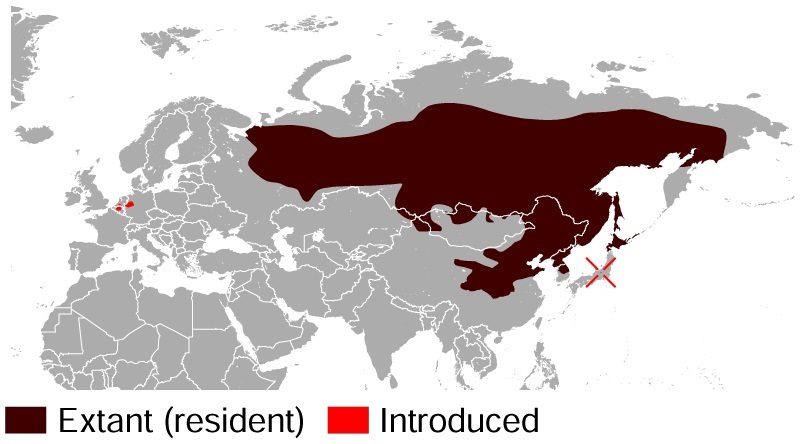
Siberian chipmunk is a species of rodents native to northern Asia. The omnivorous species was introduced in Europe as pets in the 1960s, and now it is available in many European countries.
Scientific Classification
| Kingdom | Animalia |
| Phylum | Chordata |
| Class | Mammalia |
| Order | Rodentia |
| Family | Sciuridae |
| Genus | Eutamias |
| Scientific Name | Eutamias sibiricus |
Quick Information
| Other Names | Common Chipmunk |
| Size | 18 to 25 cm |
| Weight | 50 to 150 g |
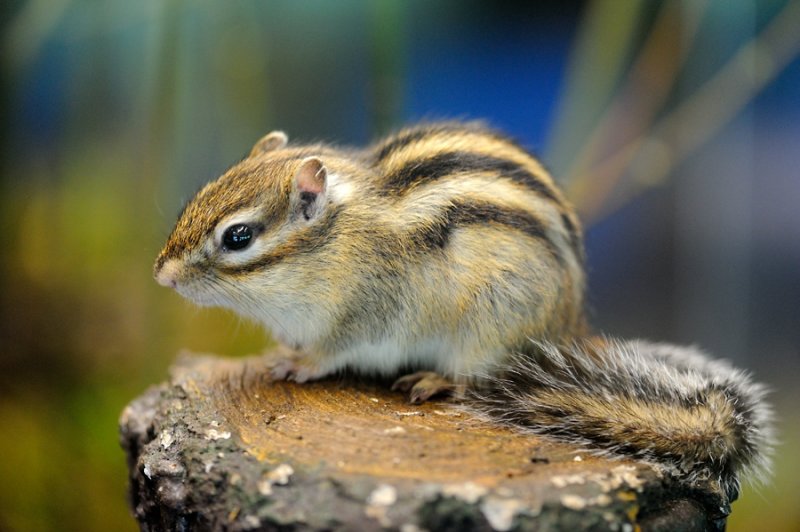
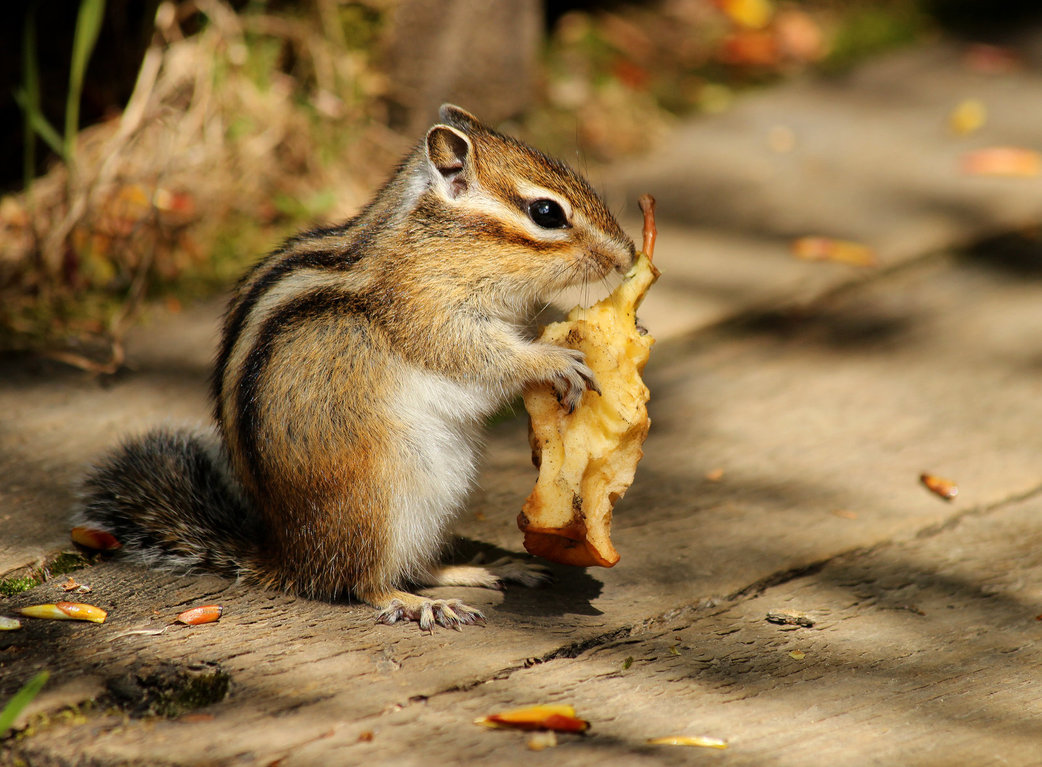
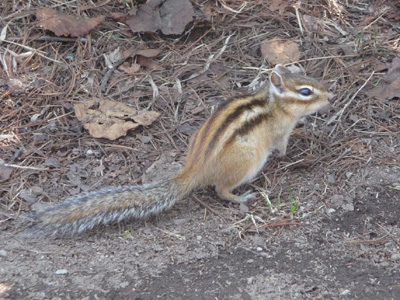
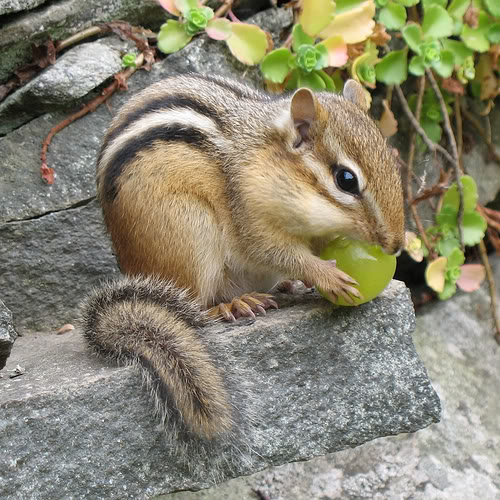
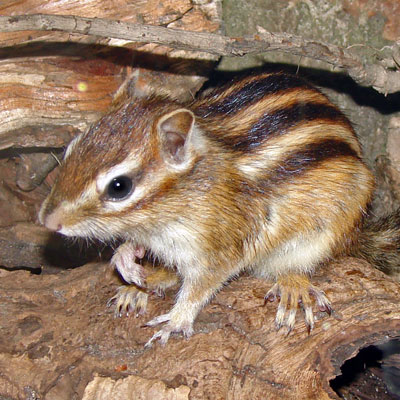
| Color | Yellow to brown fur on the back, chest and belly has white fur; four light and five dark colored stripes on the back; light brown tail with broad black lines and white edges |
| Distribution | Siberian Russia, Eastern Kazakhstan, northern Mongolia, northwest, central and northeast China, Korea, Japan, Belgium, Germany, Switzerland, the Netherlands, Italy |
| Habitat | Stony areas within coniferous , deciduous and mixed forests, mountains, urban areas with greenery |
| Vocalizations/Sounds | A fast “cheep” used as an alarm call; a deep croaking sound used for mating |
| Lifespan | 2 to 5 years; captive chipmunks can survive for 6 to 10 years |
| Diet | They eat conifer seeds, herb roots, insects, birds, reptiles, mollusks, fruits, grains, and fungus |
| Adaptations | Internal cheek pouches help them in carrying food; needle-pointed claws assist in climbing trees |
| Number of Offspring | 3 to 8 babies |
| Breeding Season | Middle of April |
| Gestation Period | 28 to 35 days |
| Predators | Raptors, weasels, small cats, foxes, hawks, owls |
| Conservation Status | Least Concern |

Behavior
Siberian Chipmunks generally lead solitary lives, but during the winter they dig burrows which they share with another member. They do not live in fixed colonies, but each individual has its own territory which is marked by urine and oral glands. They hibernate during the winter, storing 3 to 4 kg of food to survive underground till April or May.

Mating and Reproduction
They give birth to live young and tend to reproduce once or twice a year.
Lifecycle
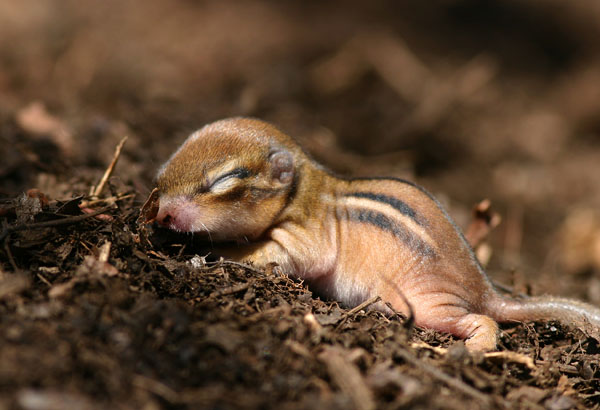
The newborns are blind and naked and open their eyes in around 20 to 25 days after birth. The females take care of the babies and teach them how to forage in around six weeks. By seven weeks, the weaning period is over, and the young ones become independent by eight weeks. Both male and female reach sexual maturity at nine months of age.
Interesting Facts
- Siberian Chipmunk, the only living member of its genus, is the only chipmunk occurring outside North America.
- The species aids forests grow and regenerate by dispersing seeds and fungal spores.
- It helps in controlling pests in its environment, thus helping in species diversity.
- The species is kept as pets and commonly sold for fur or other body parts.
- It poses threat to humans as the animal is known to eat crops. Another potential threat lies in the animal’s ability to carry diseases, like Lyme disease which can cause harm to humans.
References