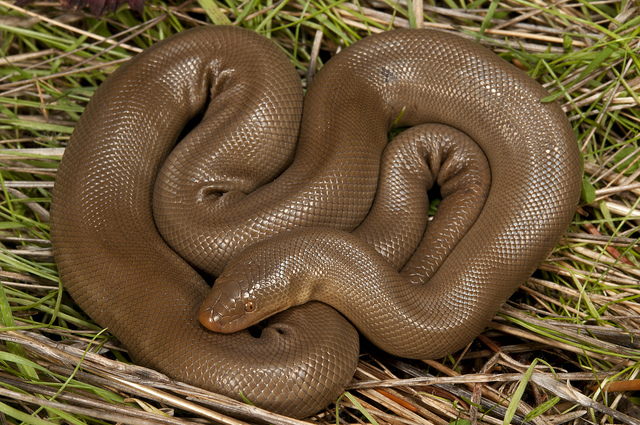
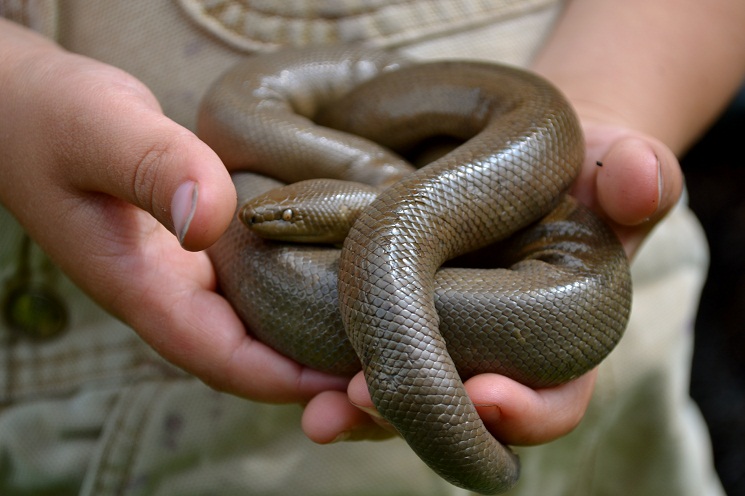
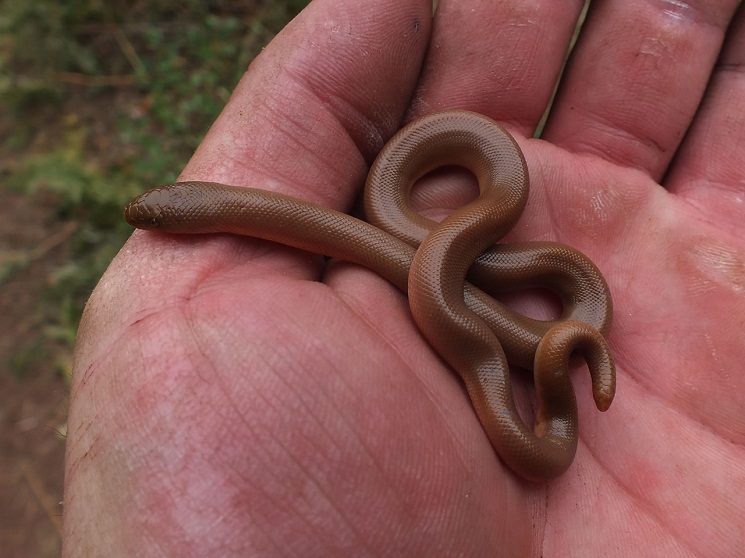
The rubber boa snake could not have been given a more appropriate name as its loose and wrinkly skin does give the feeling that it is made of rubber. One of the earliest of the boa species, even older than the much larger boa constrictor, this small reptile is found widely across North America.
Scientific Classification
| Kingdom | Animalia |
| Phylum | Chordata |
| Subphylum | Vertebrata |
| Class | Reptilia |
| Order | Squamata |
| Suborder | Serpentes |
| Family | Boidae |
| Subfamily | Erycinae |
| Genus | Charina |
| Scientific Name | Charina bottae |
Quick Information
| Also Known as | Coastal rubber boa, northern rubber boa, two-headed snake |
| Size | 15-33 inches (38-84 cm) |
| Weight | 1.23-2.47 oz (35-70 g) |
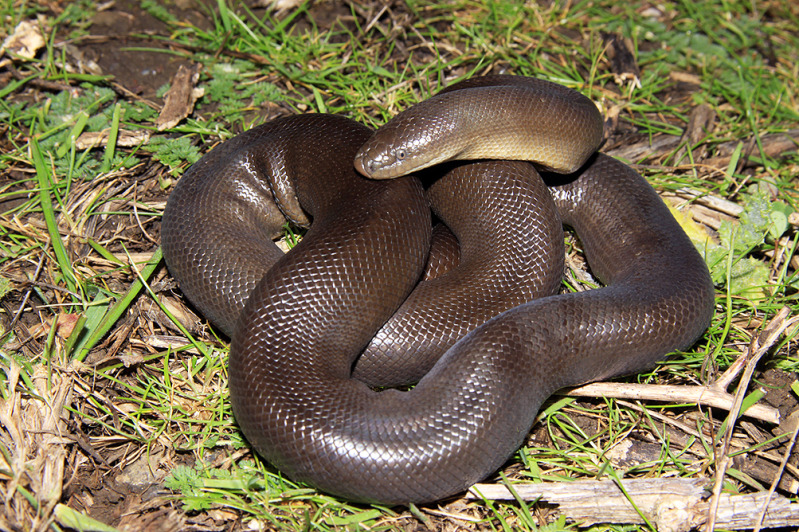
| Color | Dark brown to tan back; ventral side yellow, olive-green to orange; young are born pinkish but darken as they age |
| Distribution/Range | Continuously from the San Jacinto and San Bernardino mountains east of Los Angeles, California to British Columbia, Canada, eastward through Idaho, Nevada, Montana and Wyoming; some have also been reported from Alberta and Colorado |
| Habitat | From desert shrubs to open coniferous forests |
| Lifespan | 7.5 years on average; some have lived for 30+ years |
| Diet | Juvenile mice, shrews and voles; reptile eggs, small birds and small bats; rare cases have been reported where they’ve been seen eating other snakes |
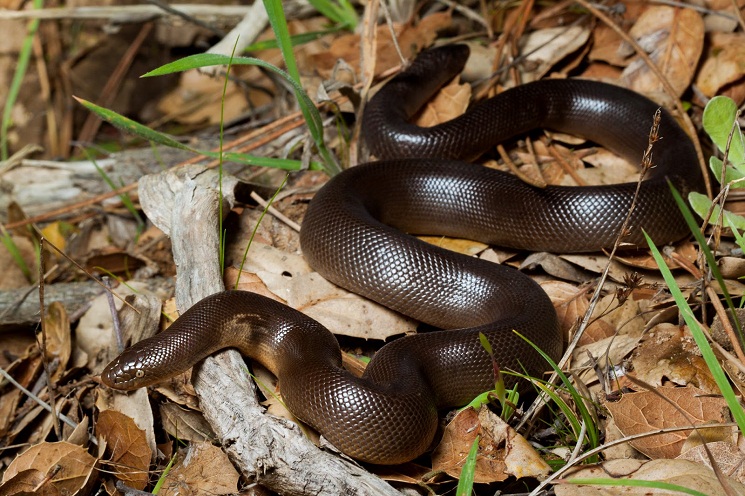
| Adaptations | The tail of this snake is nearly identical in appearance to its head; this confuses predators and prey alike |
| Mating Season | Reproduction occurs during spring |
| Gestation Period | 5 months |
| Breeding System | Ovoviviparous |
| Litter Size | 1-8 |
| Breeding Frequency | Once in 4 years |
| Predators | Raccoons, cougars, coyotes, ravens, birds of prey, cats, etc. |
| Hibernation | During the winter months right up to spring |
| IUCN Conservation Status | Least Concern |

Behavior
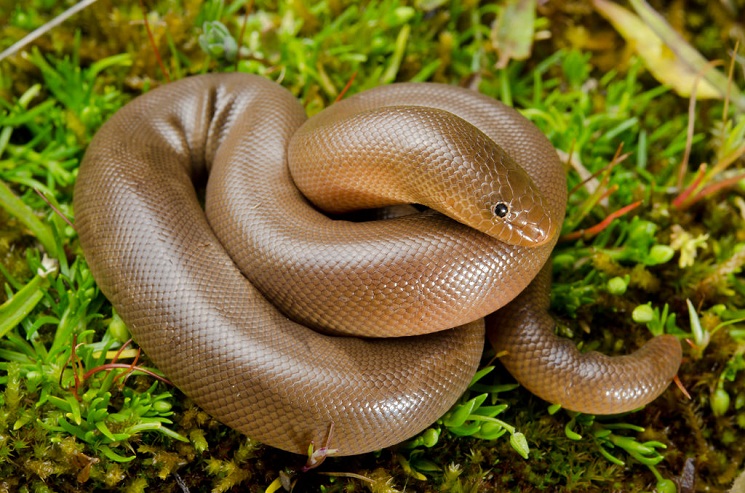
One of the most docile of snakes, the rubber boa has never been known to strike at or bite a human being. If it feels threatened, it releases a potent odor aimed to drive the trouble away. It is nocturnal, and possibly crepuscular, also being adept at swimming, burrowing and climbing. It is a very secretive and shy reptile species.
Life-cycle
Rubber boa babies are born with a length of 7.5-9.1 in (19-23 cm). They reach sexual maturity at about 2 years of age.
Interesting Facts
- The tails of a rubber boa are often scarred due to attacks from parent rodents while the snake is busy eating the young from their nest.
- The rubber boa is rather popular as a pet due to its disposition and is constantly put up for sale across the continent.
- There is considerable debate as to whether the southern rubber boa (Charina umbratica) should be considered a subspecies of the rubber boa.
References
- https://en.wikipedia.org/wiki/Rubber_boa
- https://www.rubberboas.com/Content/about.html
- https://digitalatlas.cose.isu.edu/bio/reptile/serp/chbo/chbofram.htm
- https://www.reptilefact.com/rubber-boa.html
- https://www.nps.gov/yell/learn/nature/rubber-boa.htm
- https://www.iucnredlist.org/species/91863316/18978274