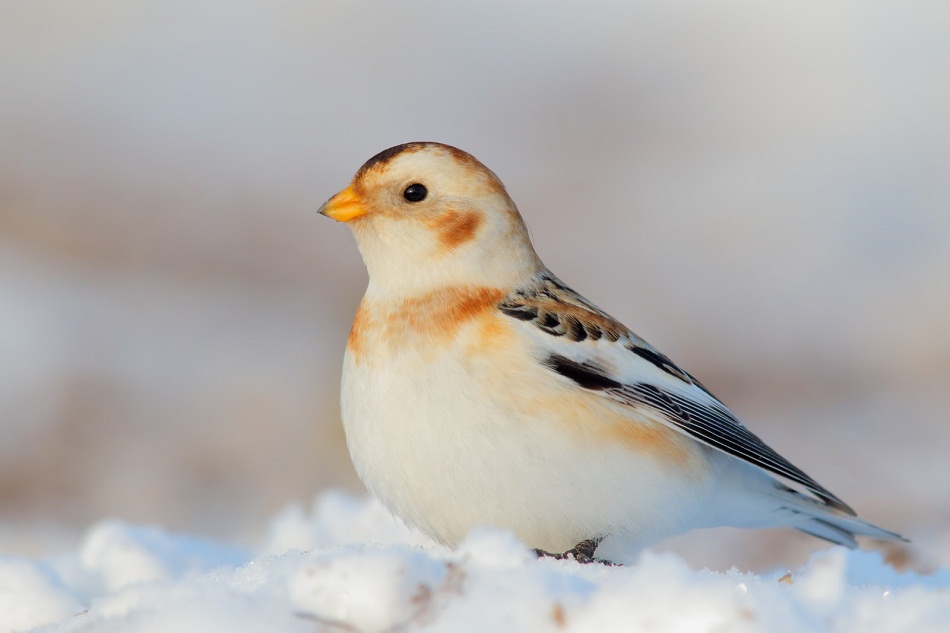
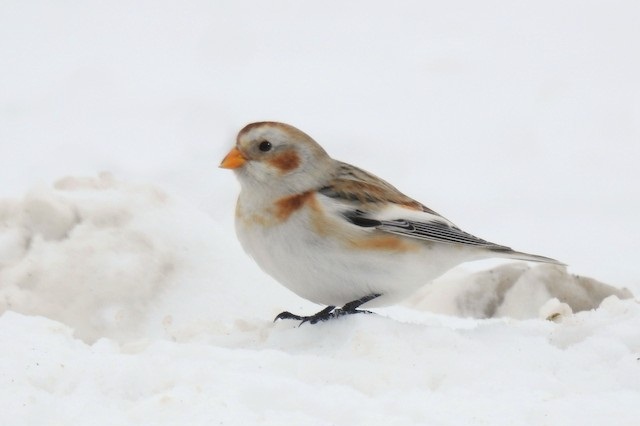
The snow bunting, as the name suggests, is a winter bird. The migratory bird has crossed with other species like Lapland bunting.
Scientific Classification
| Kingdom | Animalia |
| Phylum | Chordata |
| Class | Aves |
| Order | Passeriformes |
| Family | Calcariidae |
| Genus | Plectrophenax |
| Scientific Name | Plectrophenax nivalis |
Quick Information
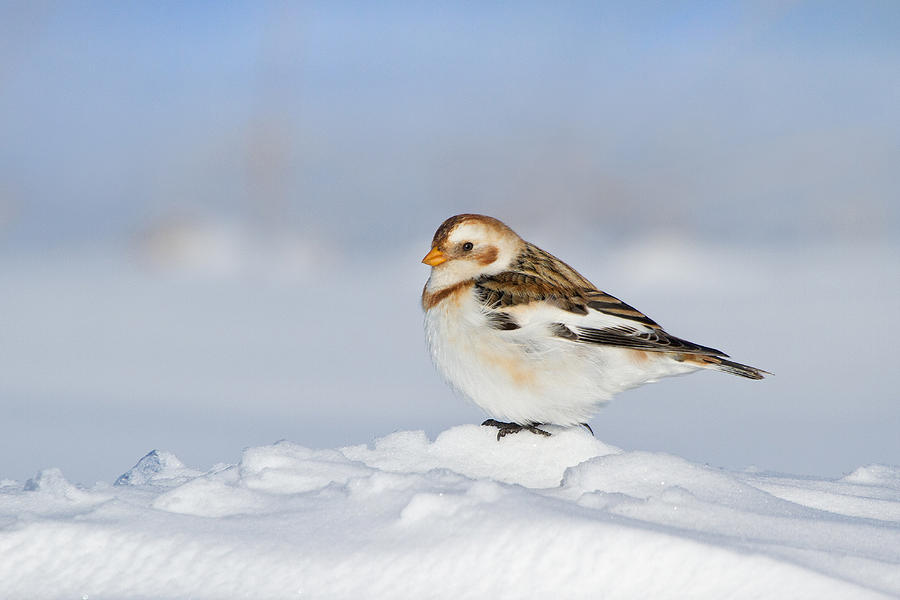
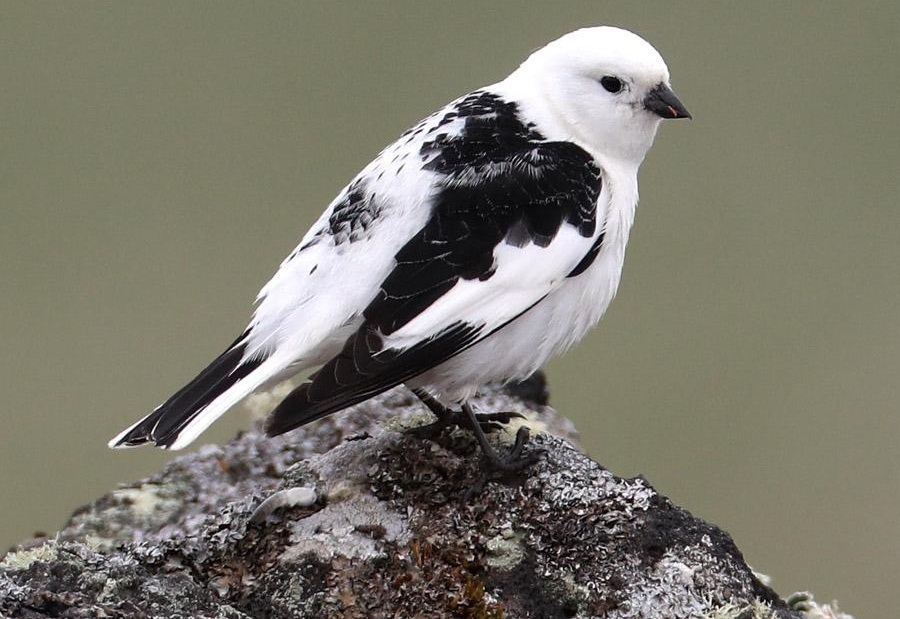
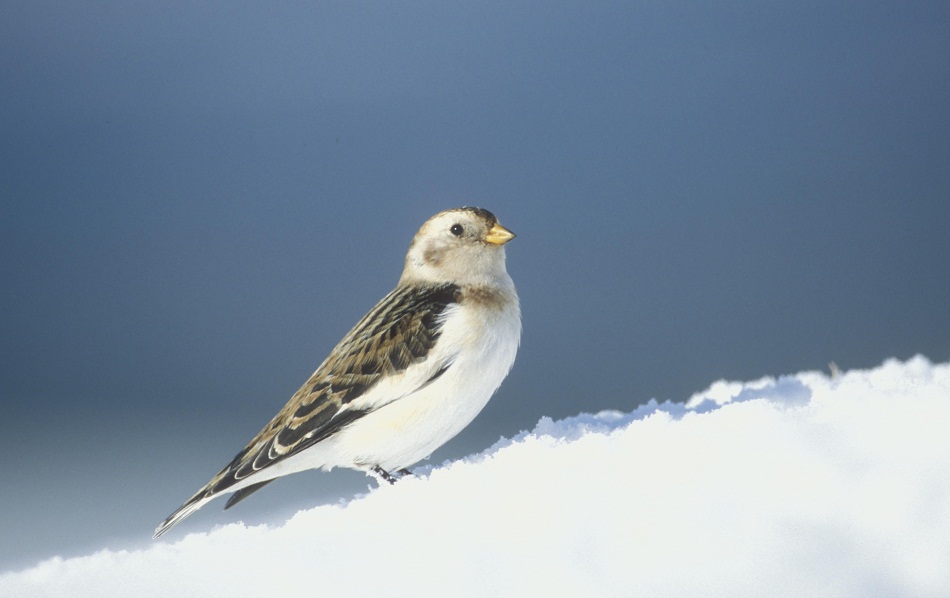
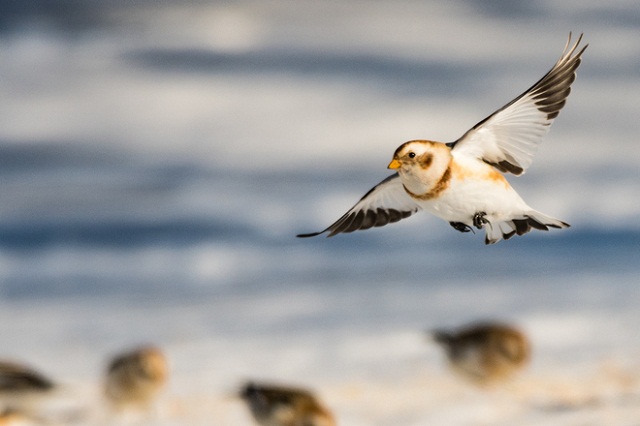
| Description | Size: Around 5.9 in (15 cm) Wingspan: 12.5-14.9 in (32-38 cm) Weight: 1.05-1.4 oz (30-40 g) Color: White body with black streaked wings while femalesare the same but males change their shades during summer and winter |
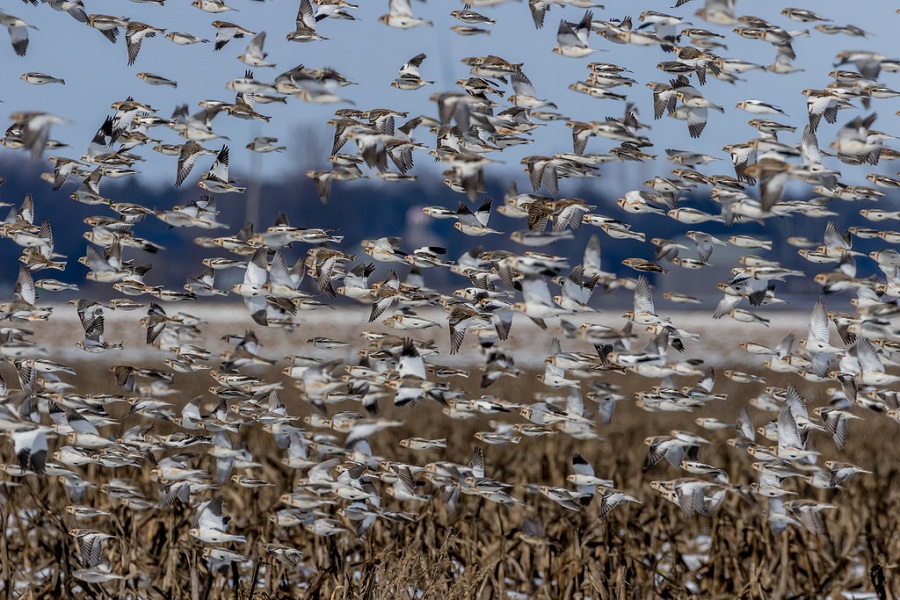
| Distribution | Iceland, Norway, Russia, Siberia, North Greenland, Scotland, southern Canada, Poland, Germany, and Ukraine |
| Habitat | Tundra |
| Sounds & Calls | “hudidi feet feet feew hudidi” and “per,r,r,rit” |
| Lifespan | Around 9 years |
| Diet | Weeds like goosefoot, ragweed, knotweed, aster, amaranth, and seeds like poppy, bilberry, crowberry and spiders, wasps, butterflies |
| Adaptation | Its beak is short yet strong, perfect for eating seeds, weeds |
| Predators | Arctic foxes, falcons, skuas, and snowy owls |
| IUCN Conservation Status | Least Concern |
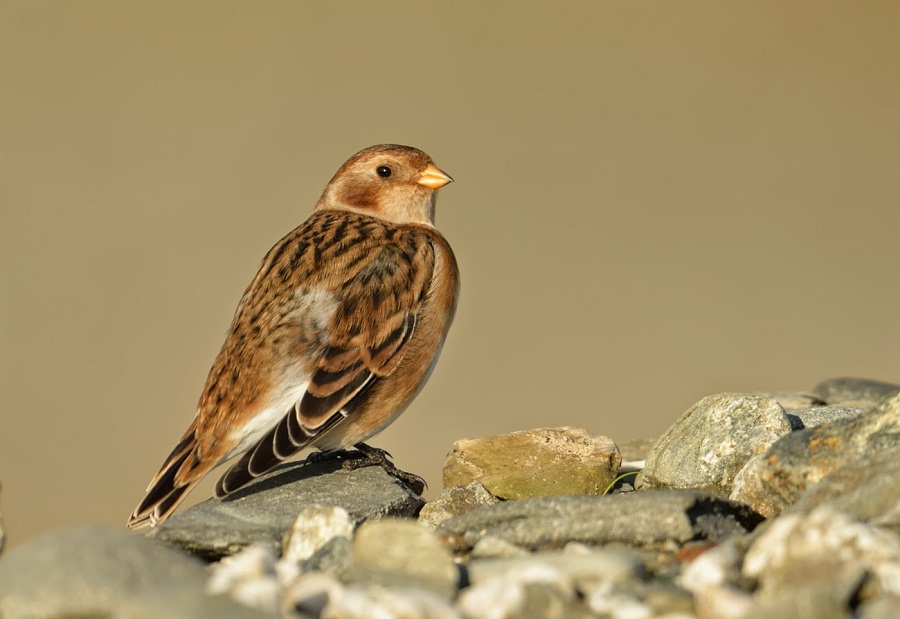
Behavior
- Snow buntings clean their feathers with hard-packed snow.
- Male birds go to the breeding site at least 3-4 weeks before their counterparts to set up their nesting ground.
Mating & Reproduction
Male and female snow bunters both sing to catch each other’s attention. The male stops signing upon finding the mate. After the mating, females lay around 2-7 eggs which are incubated for 10-15 days. The eggs are cream colored with brown spots.
Life-cycle
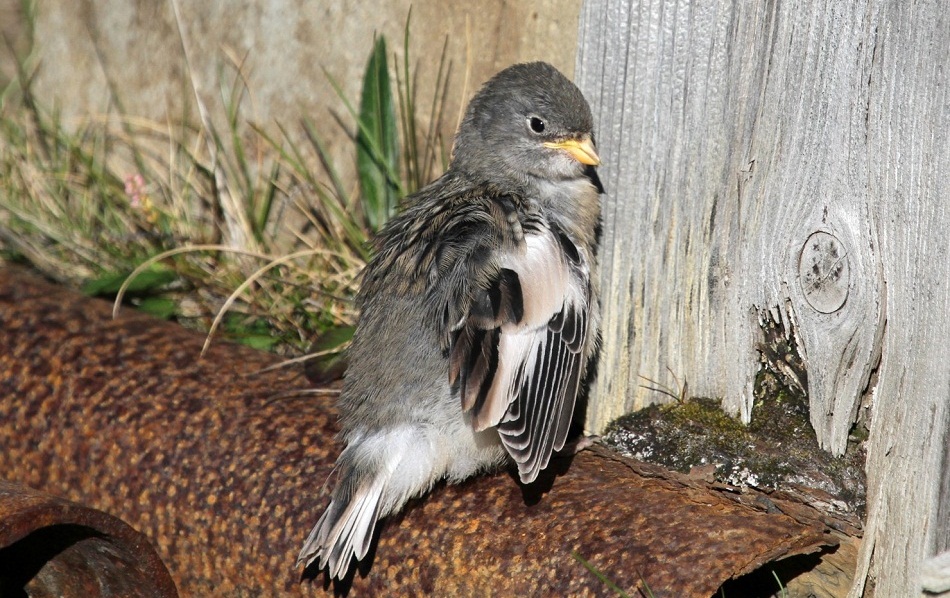
After the hatching, the juveniles take around 12-14 days before flying.
Interesting Facts
- Each male snow bunter has different vocalizations.
- The song of the birds is a parameter for judging who is going to be a better parent, as the singing capacity ensures better foraging capacity which is in again a condition for being a good parent.
- Snow bunters are known to spot Earth’s magnetic fields.
- Due to some similarities snow buntings have with McKay’s bunting, the two species are commonly confused.