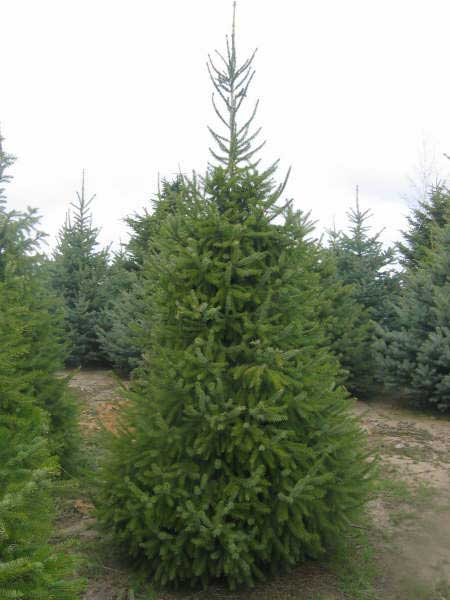
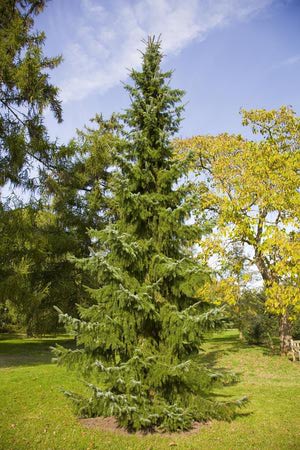
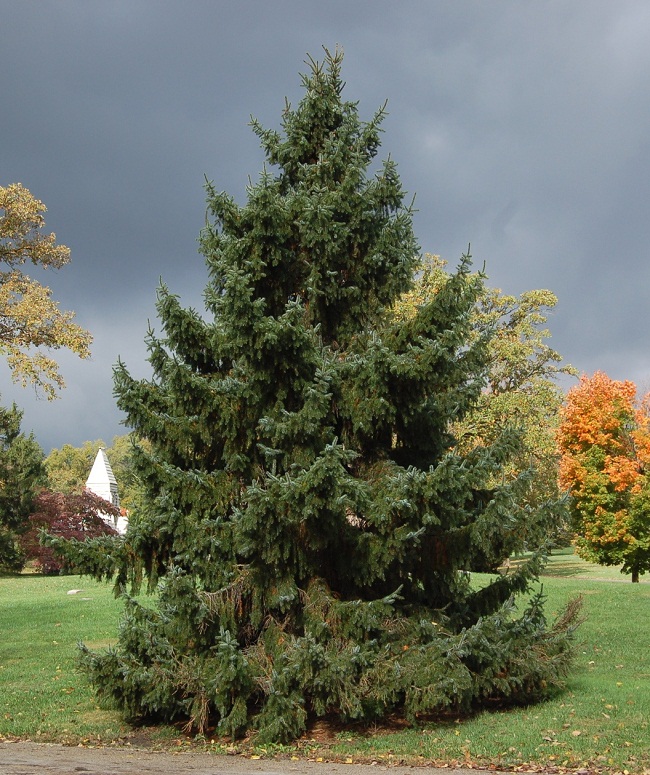
The Serbian Spruce, distinguished by its tapering form and needle-like leaves, is a species of medium-sized coniferous tree found in the mountainous regions along the Drina River valley of eastern Bosnia and western Serbia at an elevation of 2,625-5,249 ft. It has dark foliage with blue-green undersides, and its buff-brown shoots are quite hairy.
This tree was first spotted close to the Serbian village of Zaovine in 1875 by a botanist Josif Pančić, who is also credited with naming the Serbian Spruce.
Scientific Classification
| Kingdom | Plantae |
| Division | Pinophyta |
| Class | Pinopsida |
| Order | Pinales |
| Family | Pinaceae |
| Genus | Picea |
| Scientific Name | Picea omorika |
Quick Information
| Size | Commonly grows to a height of 66ft (20m), but occasionally reaches up to 131ft (40m); straight tree trunk with a diameter of about 3ft (1m); adult trees have a spread of about 2.5-4m |
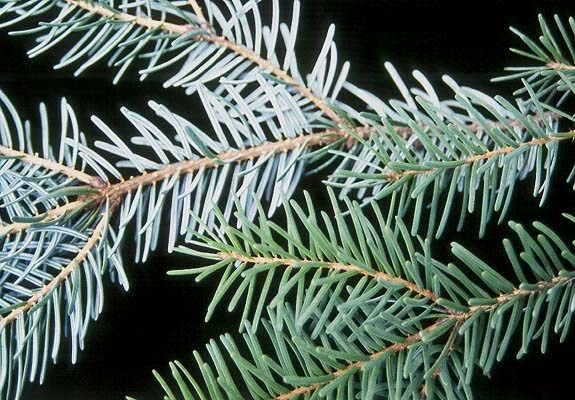
| Leaves | Flat and pointy leaves, 10-20mm long; bluish-green above but bluish-white below |
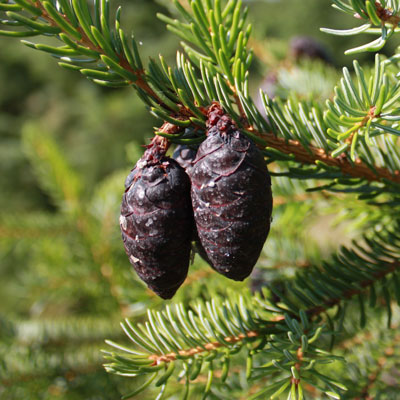
| Fruits (Cones) | Spindle-shaped, 4-7cm long; young cones are dark purple in color while the maturing ones have stiff scales and dark brown coloration |
| Tree Type | Evergreen |
| Shape at Maturity | Narrow-pyramidal at the crown |
| Distribution/Range | On the Viogor, Zvijezda, Tara, Jadovnik, and Radomišlja mountains around the Drina River in Serbia, and Bosnia and Herzegovina |
| Hardiness Zones | 4-7 |
| Lifespan | Over 60 years |
| Growth Rate | Slow to medium; annual height increase is 12-24 in |
| Growing Conditions | Winter Conditions: More tolerant to frost than the Sitka and Norway spruce, some resistance to wet snow Summer Conditions: Hot and slightly dry Rain: Over 650 mm annual precipitation Sunlight: Tolerates both direct sunlight and partial shade; needs at least 4 hours of unfiltered sunlight daily Soil Requirements: Sandy, acidic, clay, alkaline, moist, well-drained, loamy |
| Diseases and Pests | Rust diseases and needle cast may affect the spruce causing their needles to turn brown or mottled yellow; sawfly larvae, spider mites, spruce needle miner, and spruce budworm larvae may infest the branches, needles, and young buds; the white pine weevil can disfigure a spruce tree if left uncontrolled |
| Flowering Time | Non-flowering |
| Wildlife Value | Not an important wildlife food source due to its limited range; small animals including deer and rabbits, as also birds, use it as a protective shelter |
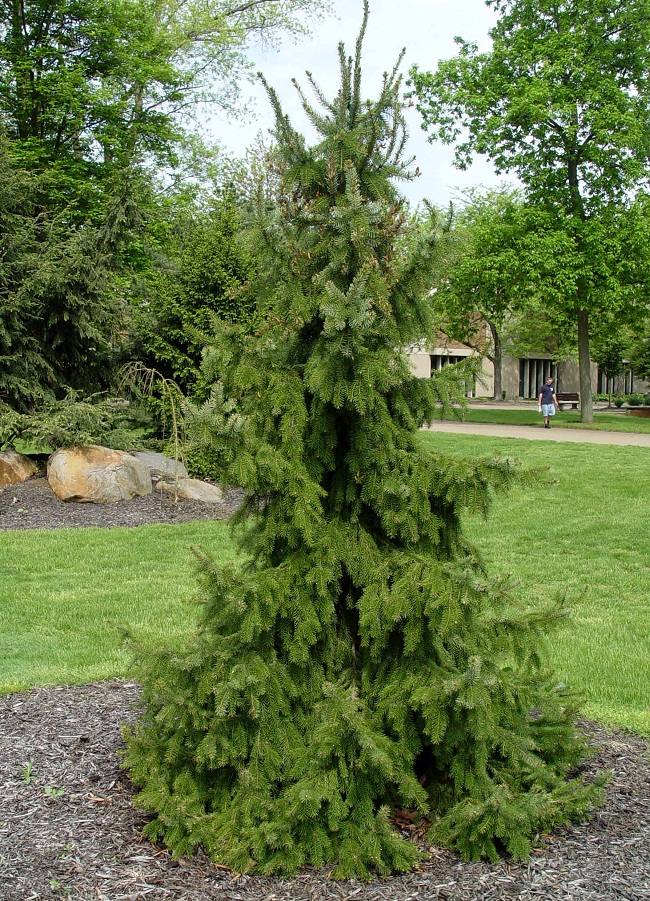
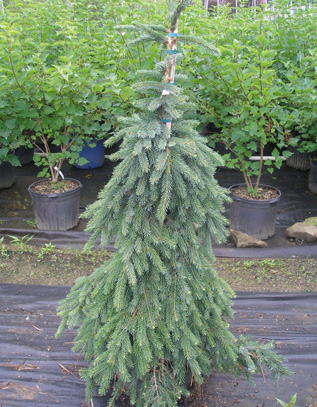
| Cultivars | Pendula (weeping form) and Nana (dwarf form) are the most widely used varieties in gardening and landscaping |
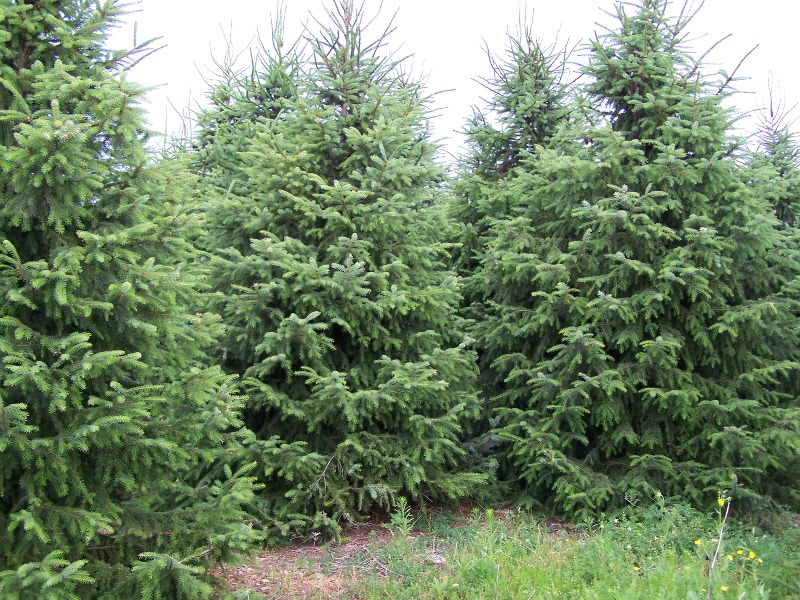
| Uses | As ornamental trees for decorative purposes; planted in groups for landscape design projects and specimen display; for timber and production of paper; ideal as Christmas tree; also crossed with the Sitka and Black spruce to produce hybrid species |
| IUCN Conservation Status | Endangered |
Interesting Facts
- The genus name Picea has been derived from pix, a Latin word meaning “pitch”, while the scientific name omorika is the Serbian word for “Serbian spruce”. The genus name refers to the resin found in the tree bark.
- These trees were distributed over a much larger area in Europe before the ice ages of Pleistocene epoch.
- The Serbian Spruce shows great tolerance to air pollution.
References