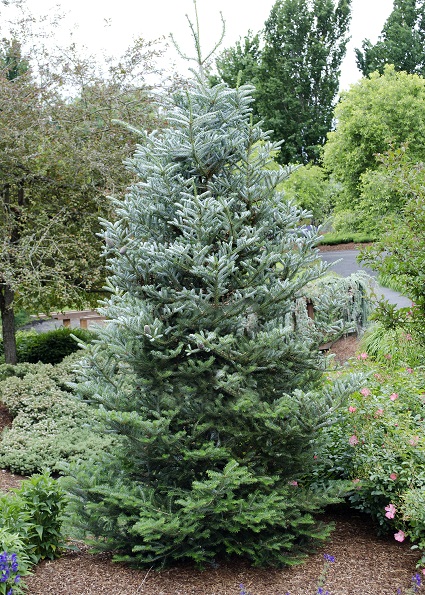
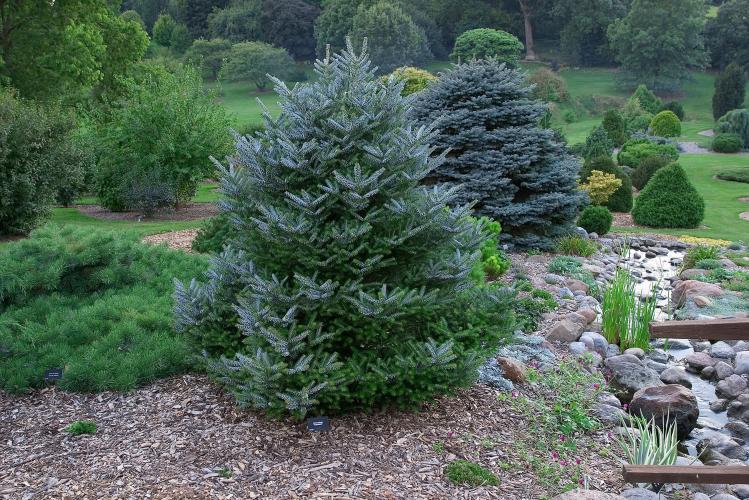
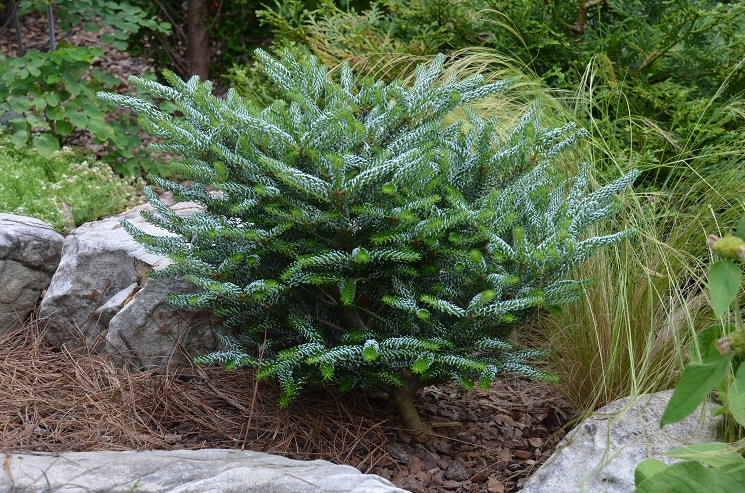
The Korean fir tree is a small to mid-sized evergreen conifer, found in the mountains of South Korea. It is a beautiful plant with ornamental foliage, revered across the world as a decorative tree for gardens and landscapes.
Scientific Classification
| Kingdom | Plantae |
| Division | Pinophyta |
| Class | Pinopsida |
| Order | Pinales |
| Family | Pinaceae |
| Genus | Abies |
| Scientific Name | Abies koreana |
Quick Information
| Other Names | Gusang Namu (in Korea) |
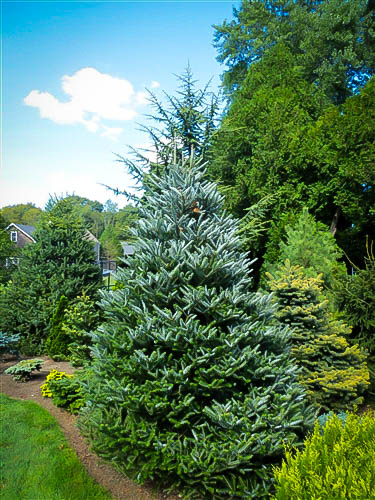
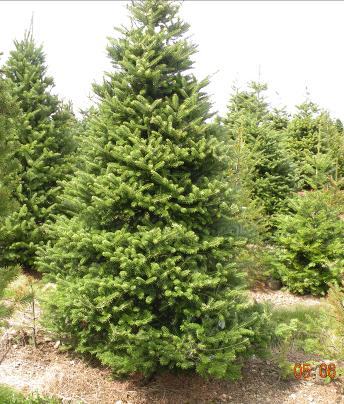
| Size | Height at maturity around 15-30 feet |
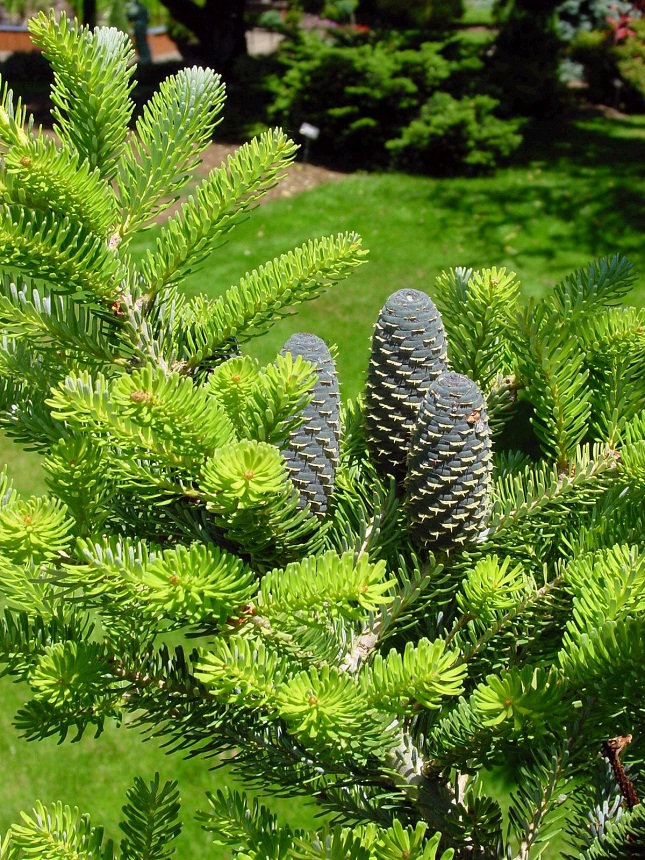
| Leaves | Needle-like, flattened; 1-2 cm long and 2-2.5 mm wide with a thickness of 0.5 mm; glossy dark green topside with two bright and vivid bands of stomata below; slightly notched tips |
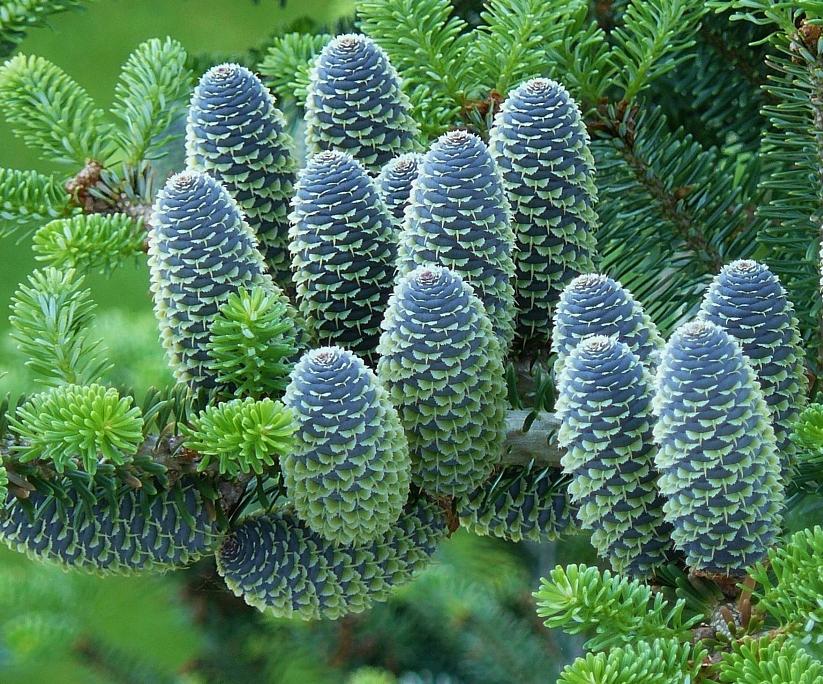
| Cones (Strobili) | 4-7 cm long and 1.5-2 cm wide; dark purple-blue when young |
| Tree Type | Evergreen |
| Shape | Symmetrical with a conical outline |
| Distribution/Range | Native range is in the mountains of South Korea, including Jeju-do Island at altitudes of 3,280-6230 feet |
| Hardiness Zones | 5-7 |
| Lifespan | Around 30 years |
| Growth Rate | Slow for the first 5 years, picks up the pace after that |
| Growing Conditions | Spring Conditions: Fertilizer should be applied in early spring before newly-grown appear Water: High requirement for water except the rainy season Sunlight: Full Sun Soil requirements: Cool, moist, well-drained sandy, loamy or clay soil, with high acidic pH |
| Pests and Diseases | Needle rust, root rot disease, twig blight, aphids, bagworms, balsam wooly adelgids, bark beetles, scales, spider mites, spruce budworms |
| Flowering/Fruiting | Flowering period: June, July, and August Fruiting period: March to May |
| Seed Production | Colorful cones are borne at a very young age; by 5 years of age, cones bear purple/blue color |
| Seedling Development | Germination happens almost a year after they have been sown into well-drained, sandy compost soil; should be covered to their own depth either with grit or sand; artificial heat is not necessary; germination process is rather slow during spring months |
| Wildlife Value | This tree has not been known to exhibit any wildlife value |
| Cultivars |
|
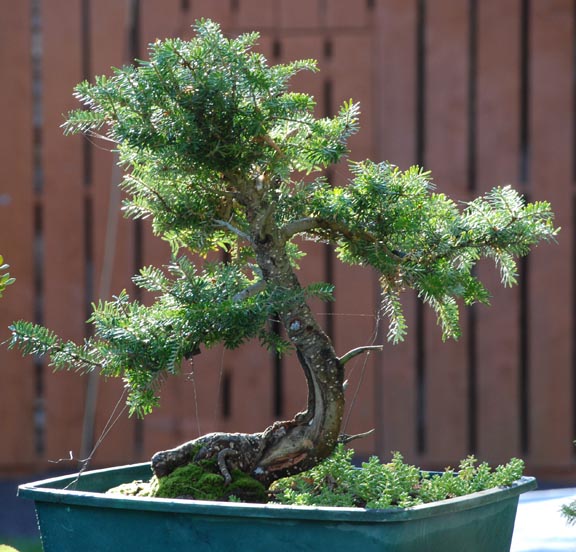
| Uses | Makes for an attractive ornamental tree |
| IUCN Conservation Status | Endangered |
Interesting facts
- The Korean fir has such symmetry that its cones are very geometric, exact and perfectly groomed, not one of its needles look out of place.
- The ‘Silberlocke’ and ‘Aurea’ variants are so named because of their silver and golden foliages, respectively.
References
- https://en.wikipedia.org/wiki/Abies_koreana
- https://www.telegraph.co.uk/gardening/3336731/How-to-grow-Korean-fir.html
- https://www.gardenia.net/plant/abies-koreana-korean-fir
- https://www.weekand.com/home-garden/article/grow-korean-fir-tree-18058459.php
- https://www.rhs.org.uk/plants/44/abies-koreana/details