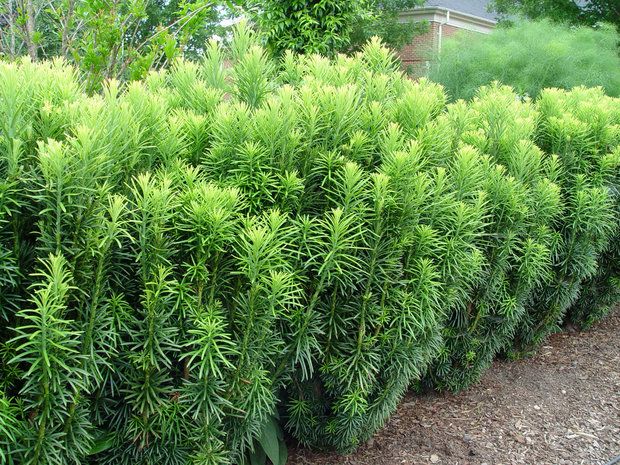
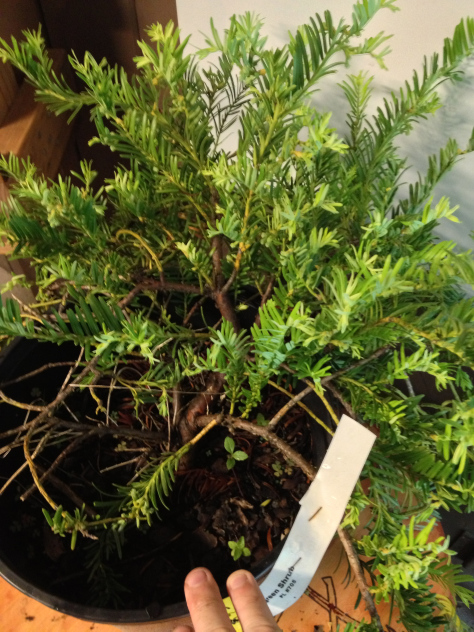
The Japanese plum yew is a deer-resistant small tree belonging to the plum-yew family. Its scientific name is in honor of the Earl of Harrington, who was the first plant this tree in a Europe.
Scientific Classification
| Kingdom | Plantae |
| Division | Pinophyta |
| Class | Pinopsida |
| Order | Pinales |
| Family | Cephalotaxaceae |
| Genus | Cephalotaxus |
| Scientific Name | Cephalotaxus harringtonii |
Quick Information
| Other Names | Korean plum yew, cowtail pine, Harrington’s cephalotaxus, Assam plum yew, plum fruit yew, spreading plum yew |
| Type | Evergreen shrub |
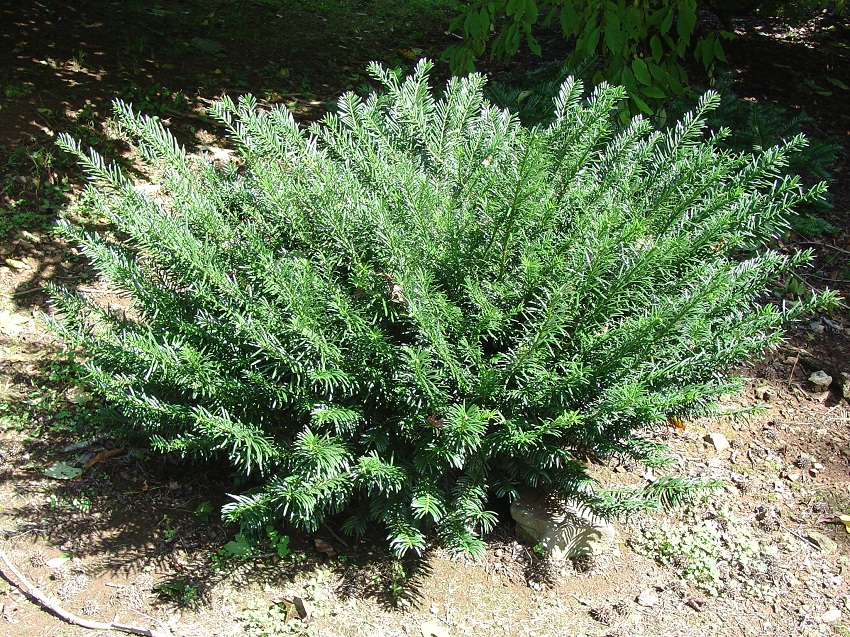
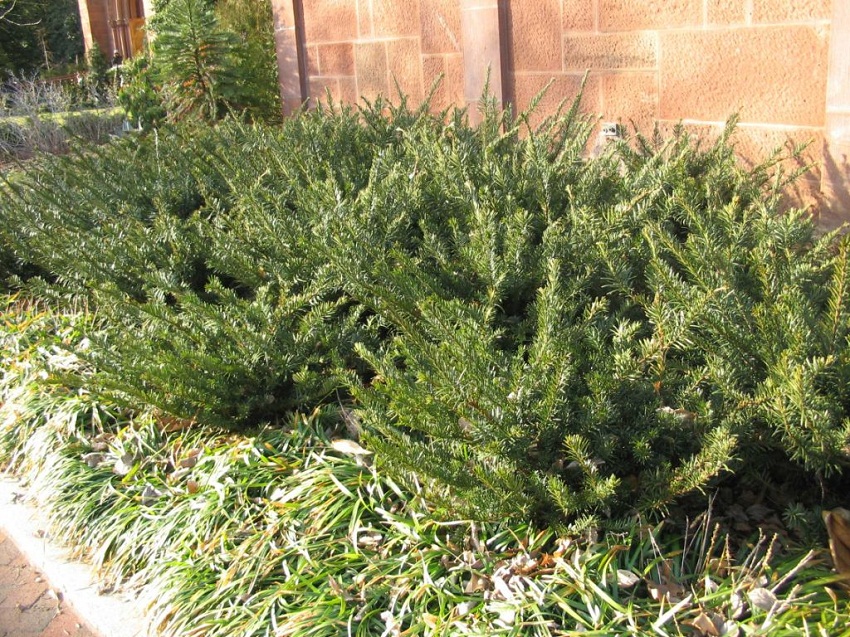
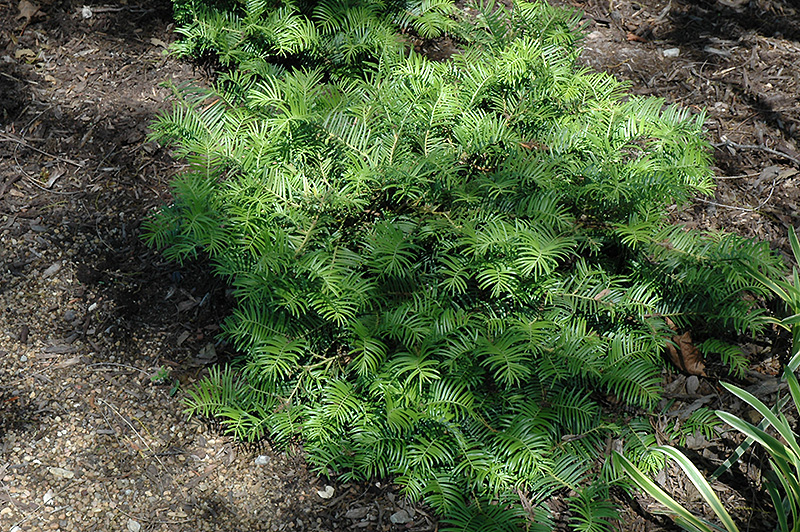
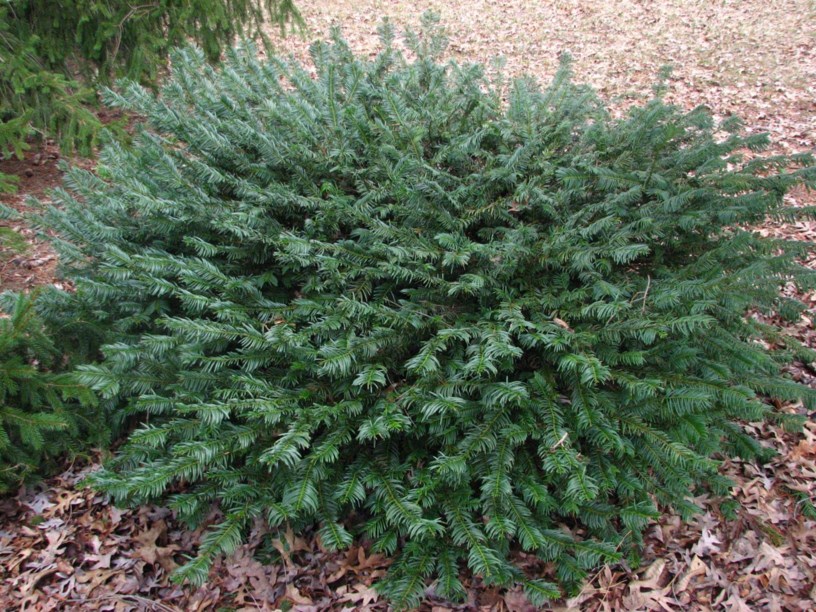
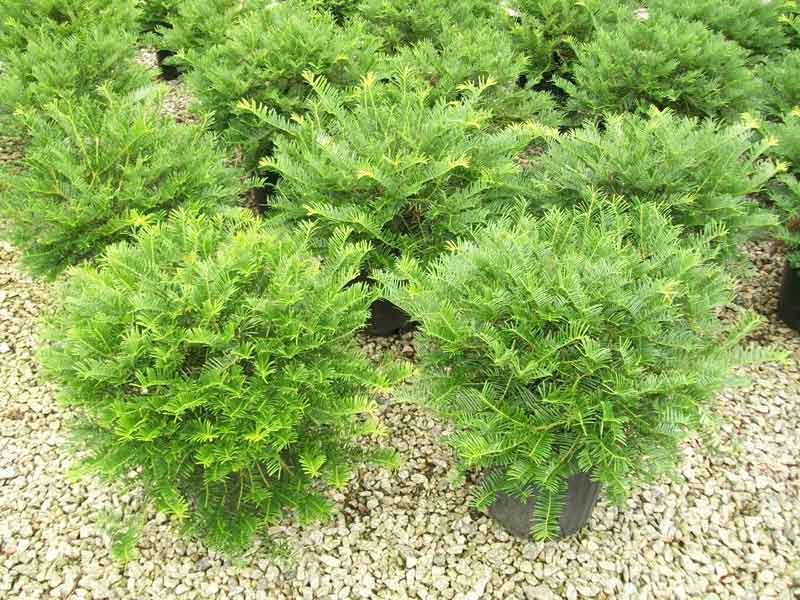
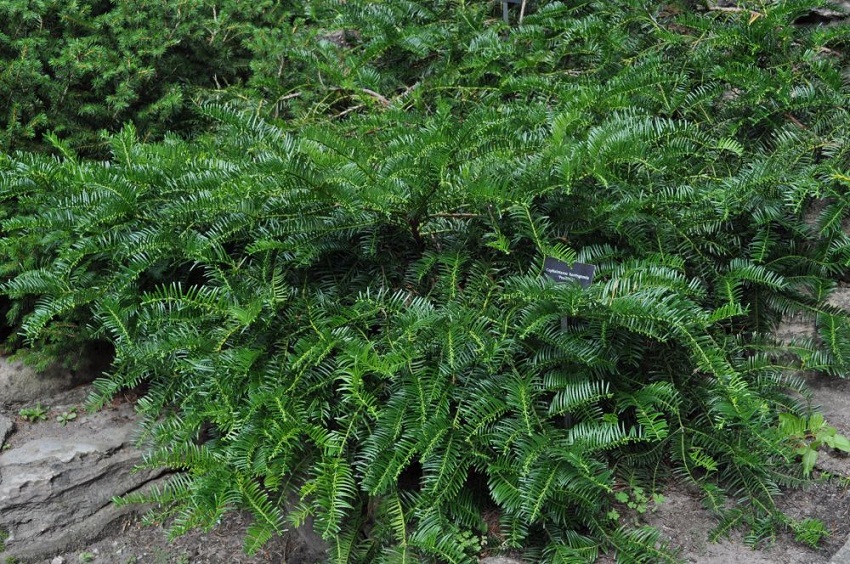
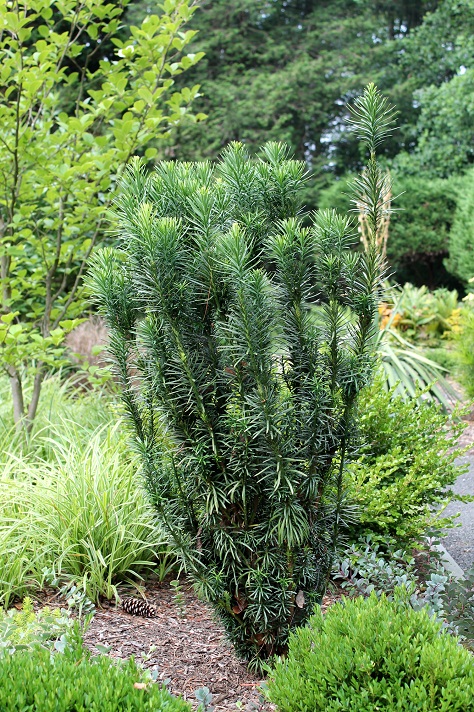
| Identification | Size: 5-10 ft (1.5-3 m) tall and 5-14 ft (1.5-4.3 m) wide Trunk Diameter: 4 ft (1.2 m) Needles (Leaves): Linear, 2 in (5 cm) long, 0.12 in (0.30 cm) wide, leathery, dark-green above and lighter green below, arranged on either side of the shoot Bark: Grey-colored Flowers: Males are pale cream-colored, becoming brown as they age, globular-shaped; females are spherical, can be found at the base of shoots Cones: Smooth, pale green with darker green stripes, ovoid-shaped, 1 inch long, 0.6 inch wide |
| Distribution | They are native to Japan and Korea |
| Habitat | Woodlands of deciduous forests at heights of 1,970-3,280 ft (600-1,000 m) |
| Hardiness Zones | 6-9 |
| Growth Rate | Slow |
| Lifespan | 50-150 years |
| Growing Conditions | Summer: Part shade during hot summers, full sun during cooler ones Winter: First year of winter should be in cover Water: Moderate Light Requirement: Full sun to full shade Soil: Sand, loam, clay |
| Diseases & Pests | None |
| Reproduction System | Dioecious |
| Propagation | By cuttings and seeds |
| Seedling Development | Germination may take more than a year and half |
| Cutivars |
|
| Uses | Ornamental; a substance known as omacetaxine, extracted from the leaves is used in treatment of leukemia |
| IUCN Conservation Status | Least Concern |
Interesting Facts
- Oil derived from the fruits of the Japanese plum yew is edible, as are the seeds.
- This plant is sometimes confused with the similar sounding Japanese yew.
References:
- http://www.missouribotanicalgarden.org/PlantFinder/PlantFinderDetails.aspx?kempercode=c769
- https://selectree.calpoly.edu/tree-detail/cephalotaxus-harringtonia
- https://landscapeplants.aub.edu.lb/Plants/GetPDF/91b93daa-46d8-4654-a25c-ab490dcf7b10
- http://rslandscapedesign.blogspot.com/2010/03/cephalotaxus-plum-yew.html
- https://www.thespruce.com/japanese-plum-yew-growing-profile-3269170
- https://pfaf.org/user/plant.aspx?LatinName=Cephalotaxus+harringtonia
- https://www.monrovia.com/spreading-japanese-plum-yew.html