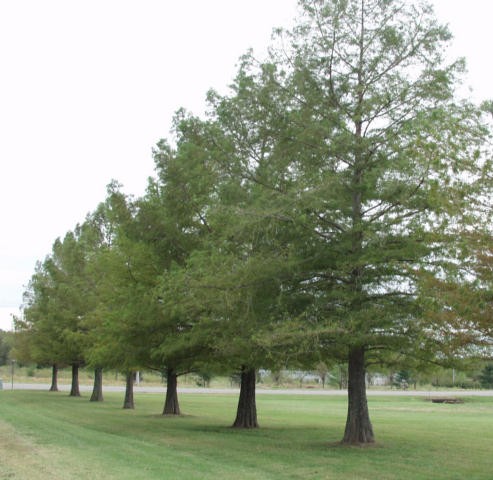
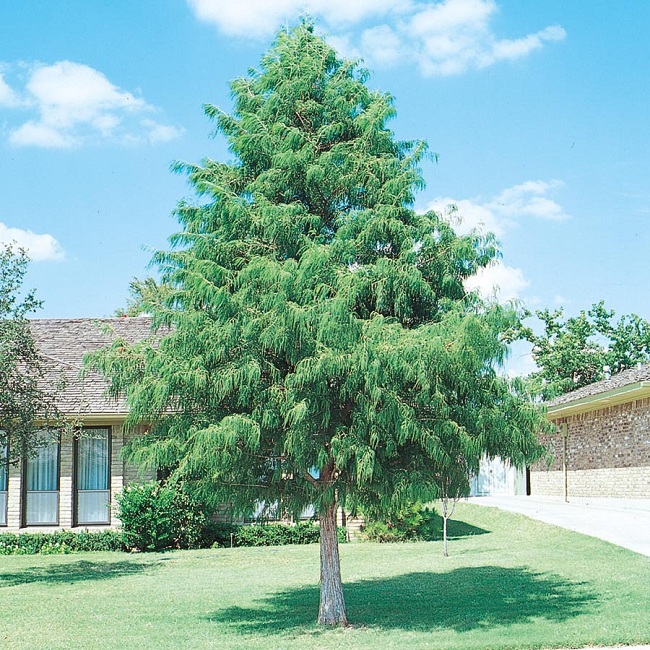
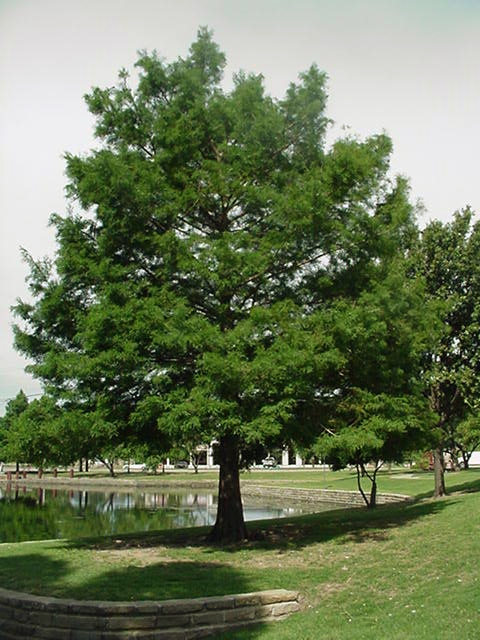
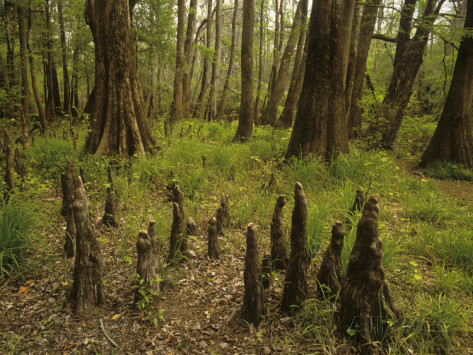
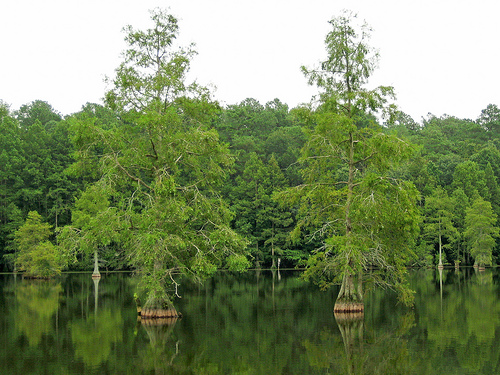
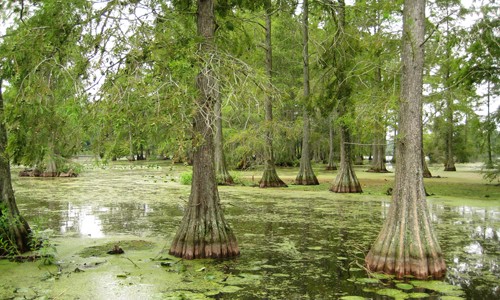
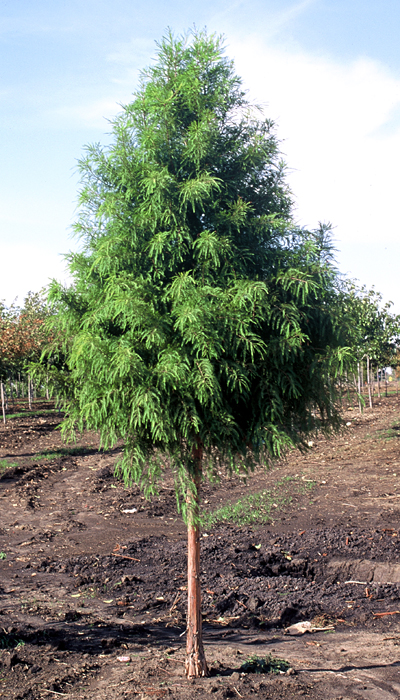
Bald cypress, also known as swamp cypress, or southern-cypress is a large-sized coniferous tree found in the Gulf Coastal Plains and the Southeastern United States. It has a pyramid-shaped crown when young, turning columnar at maturity. Trees growing in swampy conditions are known for their pneumatophores, commonly called “cypress knees,” which are special types of aerial roots used for transporting oxygen to the underground root system.
Scientific Classification
| Kingdom | Plantae |
| Division | Pinophyta |
| Class | Pinopsida |
| Order | Pinales |
| Family | Cupressaceae |
| Genus | Taxodium |
| Scientific Name | Taxodium distichum |
Quick Information
| Other Names | Baldcypress, Yellow-cypress, Red-cypress, Gulf-cypress, Tidewater red cypress, White-cypress |
| Size | 100-120 ft (30-35 m) tall; 3-6 ft (1-2 m) |
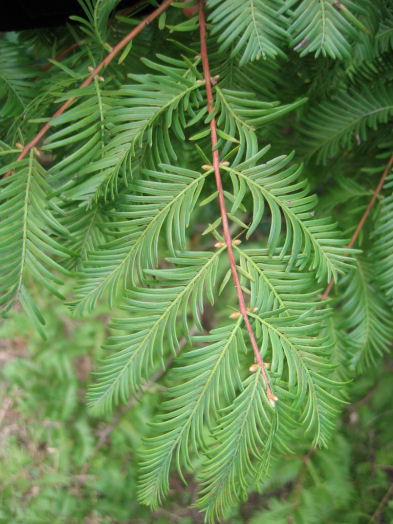
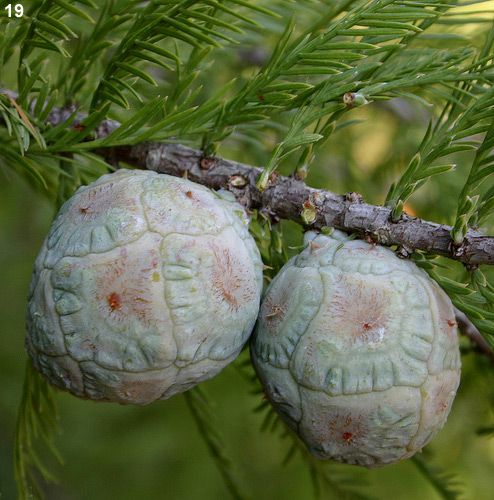
| Identification | Leaves (Needles): Linear and alternate; flat blades appear on spirally arranged twigs, twisted or curled at the base; 1-2 cm long, 1-2 mm wide Cones: Green when young, gray-brown when matured, 13-36 mm in diameter, globular; 9-15 four-sided scales; two triangle-shaped seeds on each scale Bark: Thin, fibrous; red-brown/gray-brown; pattern of narrow ridges and furrows |
| Tree Type | Deciduous |
| Distribution/Range | From Delaware to Florida along the Atlantic coasts; lower Gulf Coastal Plains to Southeast Texas; north Mississippi valley, southeastern Oklahoma, Missouri, southwestern Indiana, southern Illinois |
| Hardiness Zones | 4-10 |
| Growth Rate | Slow to medium; annual height increase is 13-24 in |
| Lifespan | Approximately 600 years |
| Growing Conditions | Winter Conditions: Can withstand cold; minimum winter temperatures can range between -29°C and -34°C Summer Conditions: Thrives in places with hot summers Rain: Annual precipitation from 1120-1630 mm Sunlight: Full sun, endures partial shading Soil Requirements: Moist, acidic, loamy, clayey, well-drained; can withstand both dry and wet conditions |
| Diseases and Pests | Brown pocket rot caused by the fungus Stereum taxodi; insects such as fruit tree leafroller, cypress flea beetle, cypress looper, bagworm, southern-cypress bark beetle, and baldcypress coneworm cause minor damage |
| Flowering/Fruiting | Male and female cones mature in a single growing season; the catkins become conspicuous in the winter; pollens are shed during March-April |
| Breeding System | Monoecious |
| Seed Production | Produced every year; cone scales with resin-coated seeds drop to the ground or water at maturity |
| Seedling Development | Soil saturated for 1-3 months after seed dissemination is ideal for germination; prolonged submergence of a seedling in water kills it |
| Wildlife Value | Wild turkeys, wood ducks, evening grosbeaks, squirrels, and waterfowl feed on seeds; Ospreys and bald eagles nest in bald cypress trees |
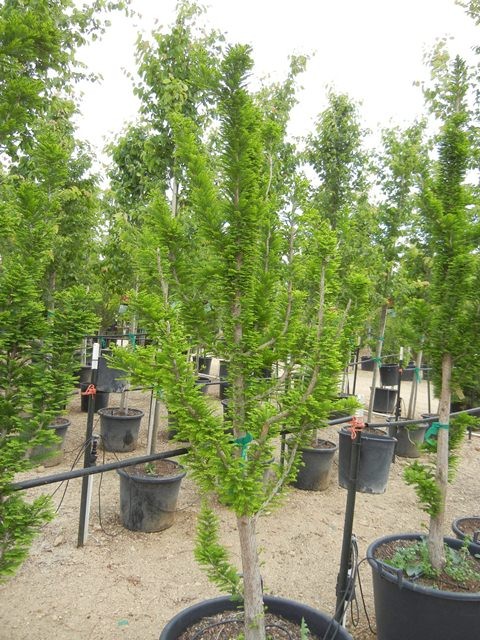
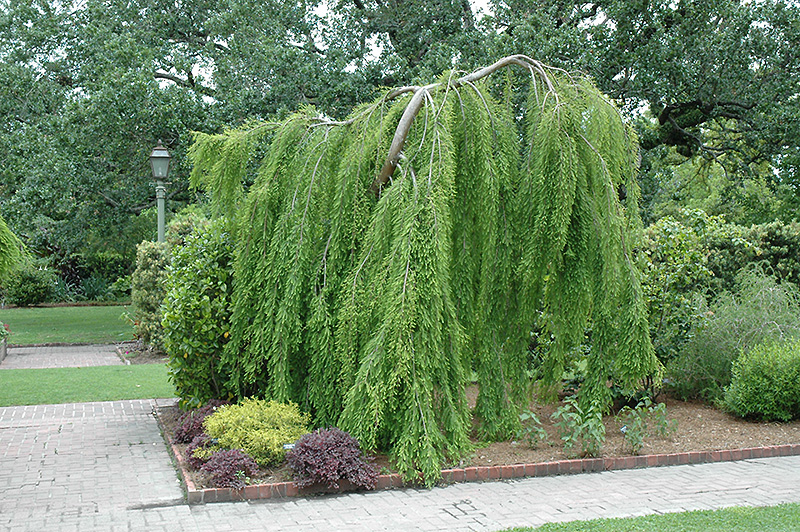
| Varieties/Cultivars |
|
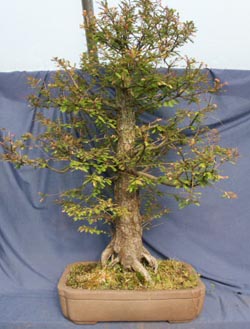
| Uses | As an ornamental tree and bonsai; Pecky cypress for decorative paneling; lumber used in building furniture, construction, flooring, greenhouses, garden boxes, cabinetry, rafters, river pilings, planking in boats, etc. |
| IUCN Conservation Status | Least Concern |
Pond Cypress vs. Bald Cypress
Although closely related to bald cypress, the pond cypress (Taxodium ascendens) is found in blackwater habitats, bearing short leaves on erect shoots. It prefers more acidic soils than bald cypress and rarely grows on sites, which receive nutrients from floodwaters.
Interesting Facts
- The bald cypress is Louisiana’s official state tree.
- The oldest known bald cypress, found in Bladen County in North Carolina, is more than 1,600 years old.
References