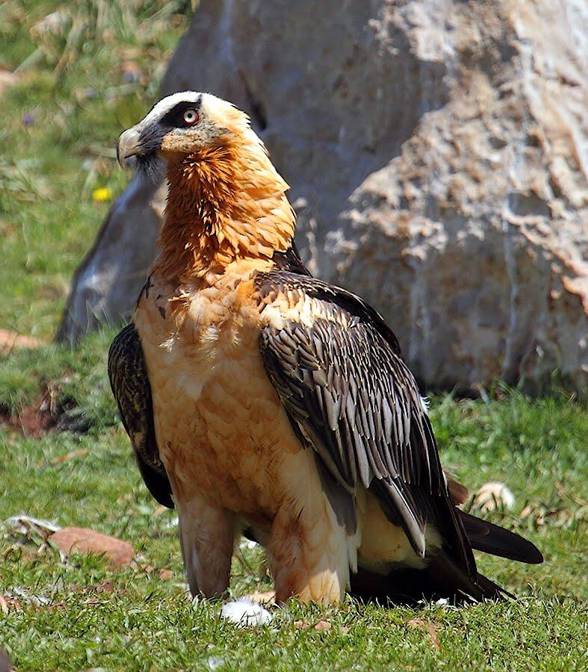
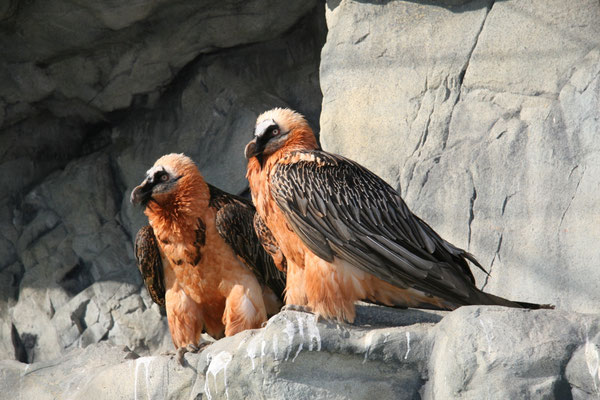
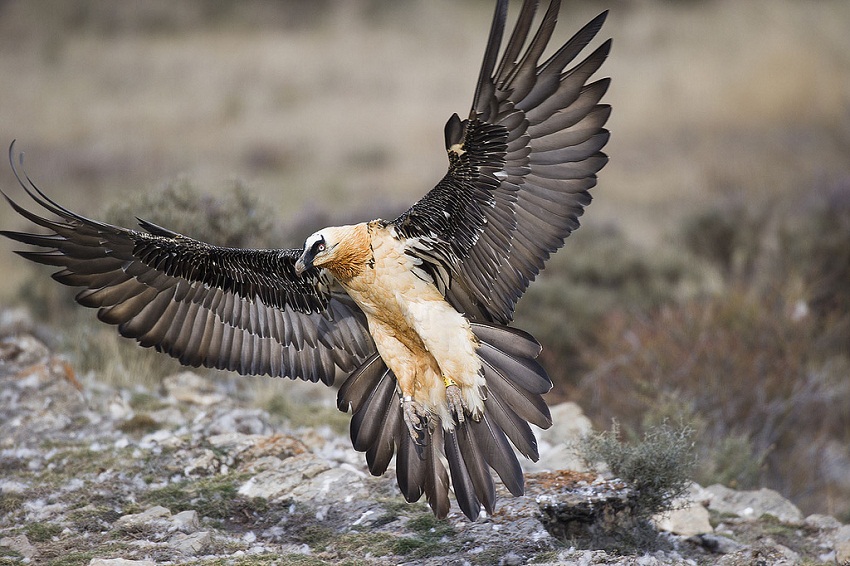
Bearded vultures are one of the largest old world vultures found in Asia, Europe, and Africa. Its population, although widespread, has been in decline because of overhunting across most of its range.
Scientific Classification
| Kingdom | Animalia |
| Phylum | Chordata |
| Class | Aves |
| Order | Accipitriformes |
| Family | Accipitridae |
| Genus | Gypaetus |
| Scientific Name | Gypaetus barbatus |
Quick Information
| Also known as | Lämmergeier, ossifrage |
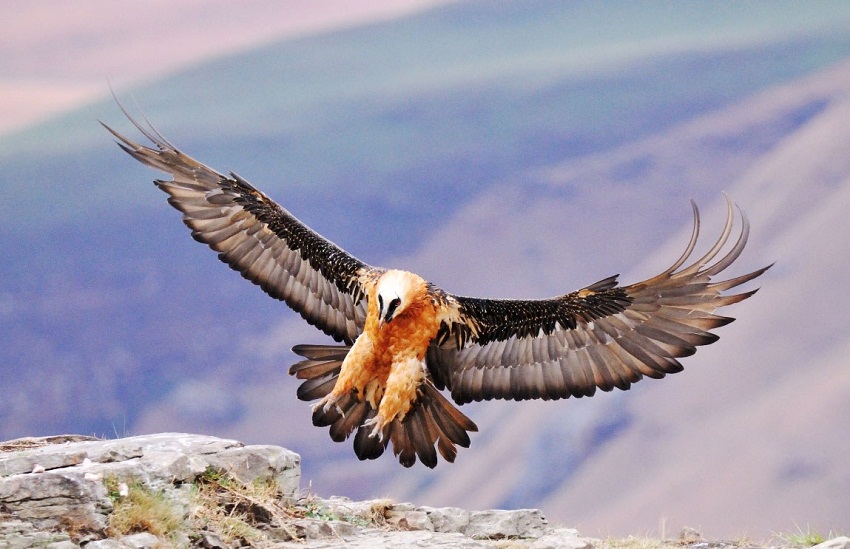
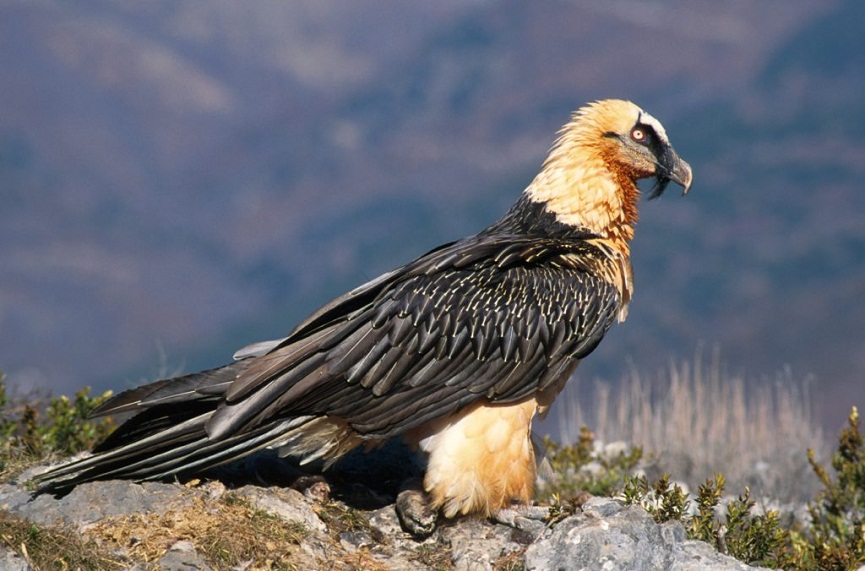
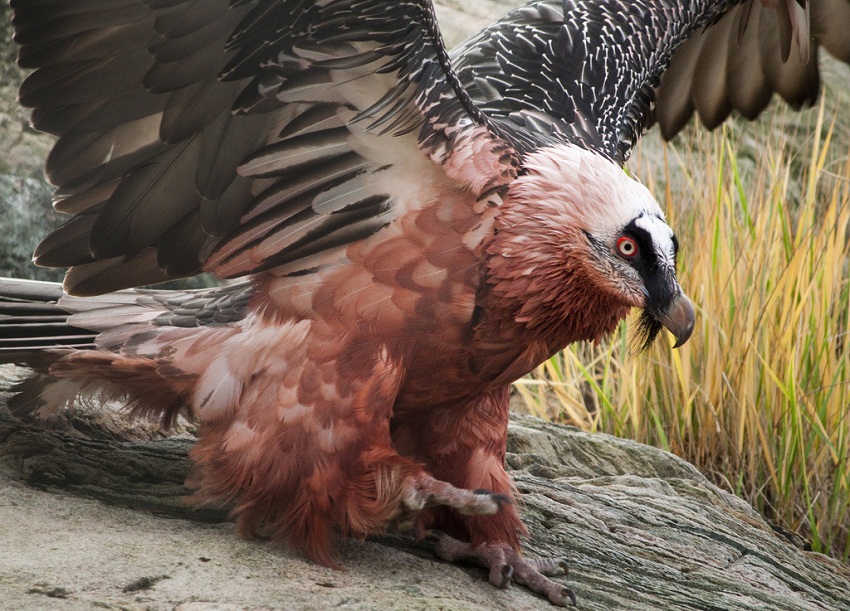
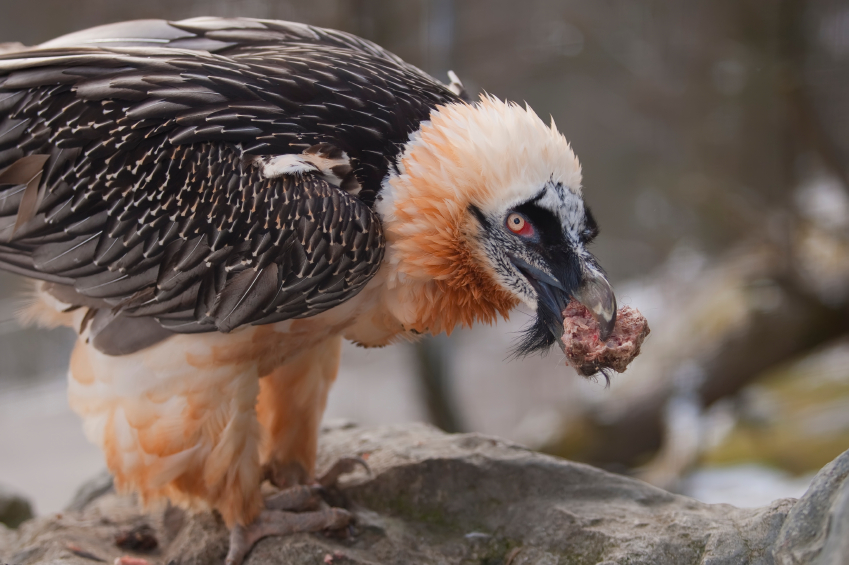
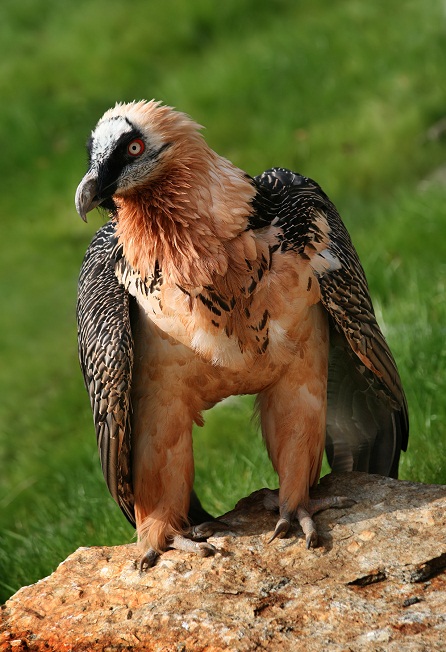
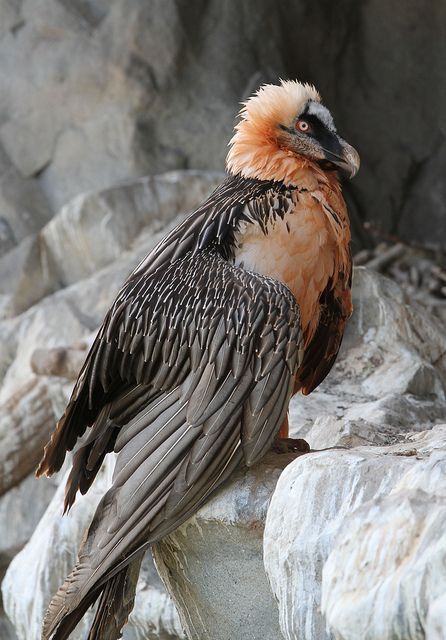
| Description | Size: 37-49 inches (94-125 centimeters) Weight: 9.9-17.2 lbs (4.5-7.8 kg) Wingspan: 7.6-9.3 ft (2.31-2.83 m) Color: Adults are whitish, dark grey and rust colored; dark grayish-black or grayish-blue on the dorsal side with a darker tail but with lighter shafts; the forehead is cream-colored; there is a black-band around the eyes; there is black hair under the chin that gives them their name; plumage on the head, breast and leg varies between orange and rust Sexual Dimorphism: Females marginally larger |
| Distribution | Mountains of Europe and Asia, including the Pyrenees, Alps, Caucasus, Zagros Mountains, Alborzs, Afghanistan, Altai Mountains, the Himalayas, as well as in the Arabian Peninsula; Also scattered sporadically throughout Africa, south all the way to South Africa |
| Habitat | Meadows, alpine pastures, heaths, montane savannas, rocky valleys, steppes, and forests |
| Sounds & Calls | Mostly silent; makes a ’cheek-acheek’ call around the nest and high-pitched whistles during breeding displays |
| Lifespan | Wild: More than 21 years Captivity: At least 45 years |
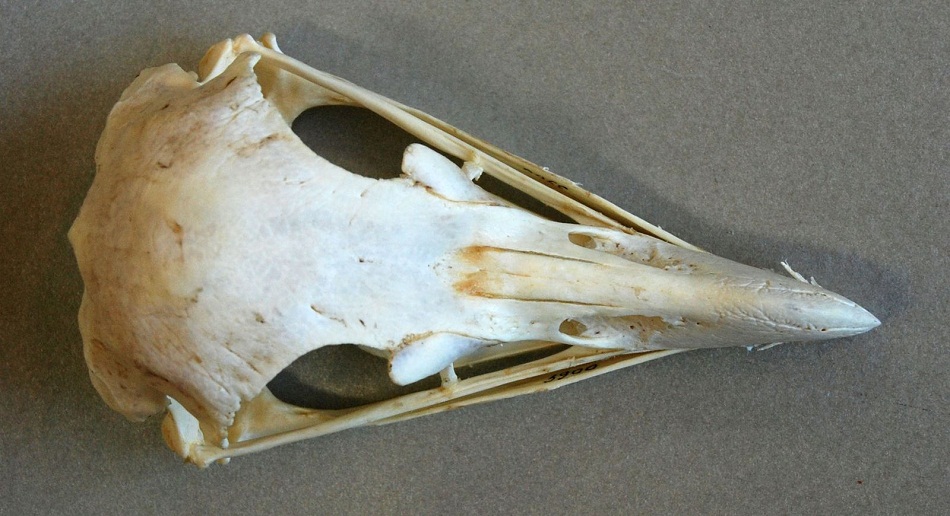
| Diet | Being a scavenger, it feeds on carrion, specifically bones and bone marrow of dead animals, which makes up as much as 90% of its diet; live animals, especially tortoises, are also taken |
| Adaptations |
|
| Predators | Golden eagles, griffon vultures, and common ravens prey on chicks; adults may also have hostile relationships with these birds, although they are not preyed upon |
| IUCN Conservation Status | Near Threatened |
Behavior
- Bearded vultures do not go in to feed while other scavengers are on a carcass. Instead, they wait patiently for the others to finish eating and go in last to feed on the bones.
- They are diurnal, being active during the day.
- They are usually solitary, other than breeding pairs.
- Pairs partake in attractive flight displays during the breeding season, showing talons, spiraling and tumbling during flight.
Mating & Reproduction
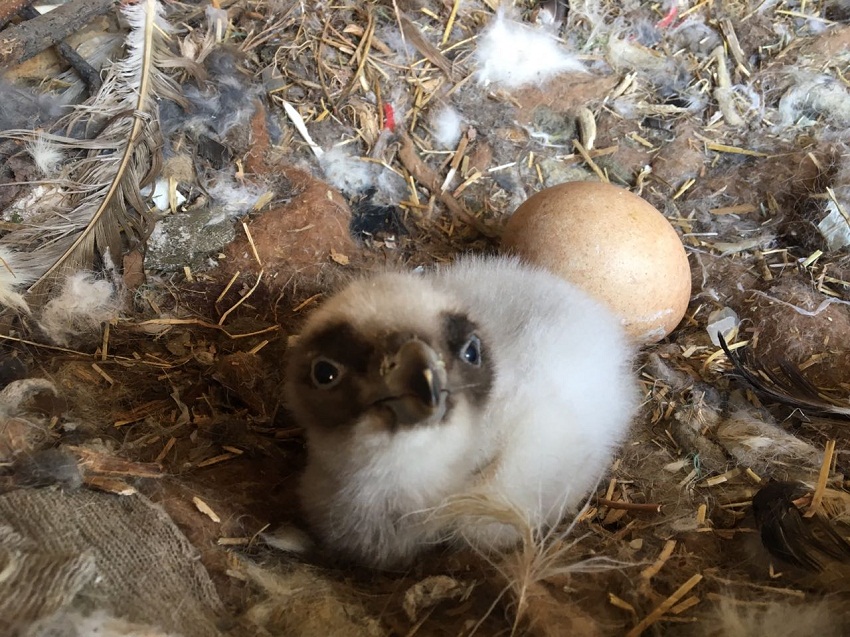
They are monogamous with varying breeding seasons depending on the range. Clutches consist of 1-2 eggs, and rarely 3. They are incubated for 53-60 days.
Life-cycle
The hatchlings fledge 100-130 days after hatching. They are usually dependant on their parents for up to two years. Males reach sexual maturity after 9 years of age while females take around 7 years 8 months.
Interesting Facts
- Lammergeier in German means ‘lamb-vulture’.
- In 1625, the Mughal Emperor Jahangir ordered the crop of a bearded vulture checked to confirm that it does indeed, feed almost exclusively on bones.
- There are an estimated 10,000 pairs of wild bearded vultures in the world.
- It is a close relative of the Egyptian vulture.
References: