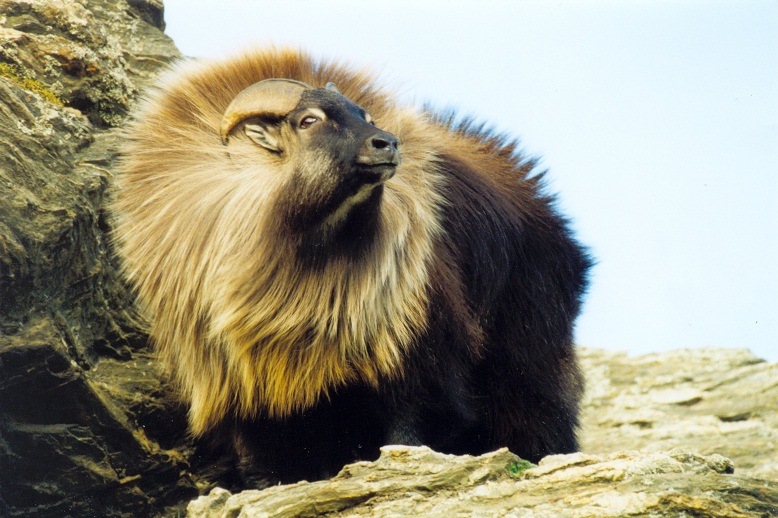
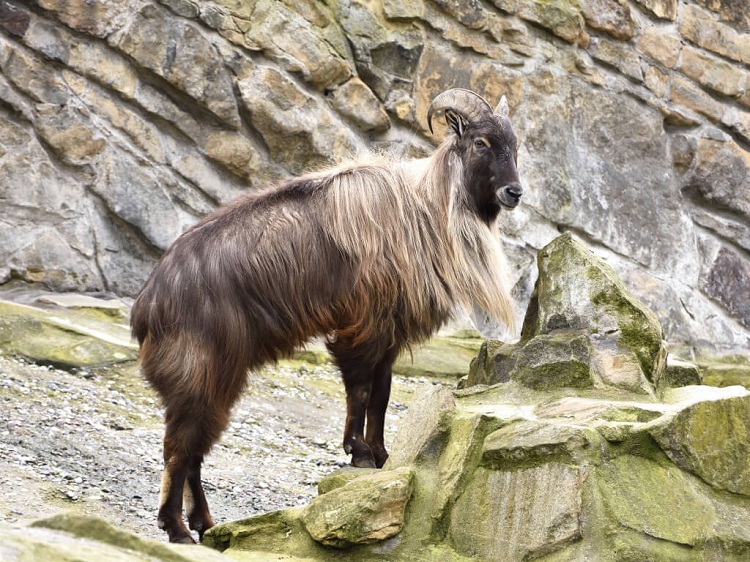
Essentially a wild goat, the Himalayan tahr is an ungulate found throughout the Himalayas and in places where it has been introduced. They are highly adapted to survive in the cold climates they inhabit.
Scientific Classification
| Kingdom | Animalia |
| Phylum | Chordata |
| Class | Mammalia |
| Order | Artiodactyla |
| Family | Bovidae |
| Subfamily | Caprinae |
| Genus | Hemitragus |
| Scientific Name | Hemitragus jemlahicus |
Quick Information
| Also Known As | Meshi, kaarth, taheer |
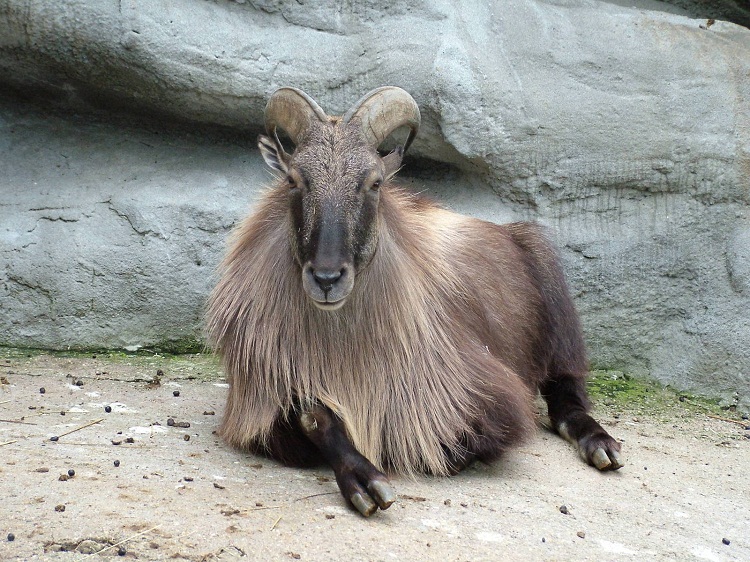
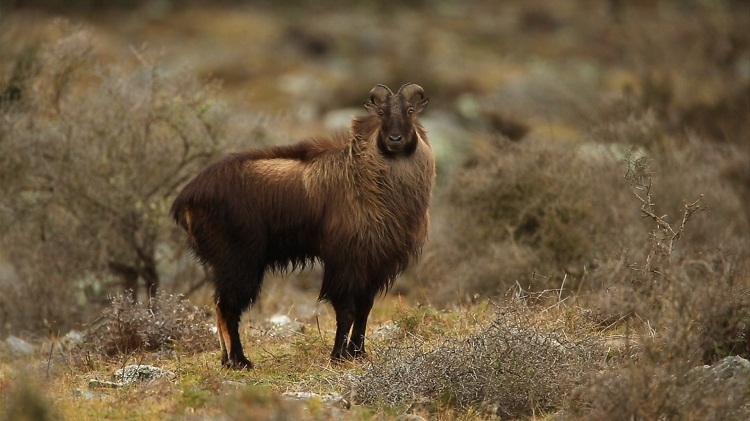
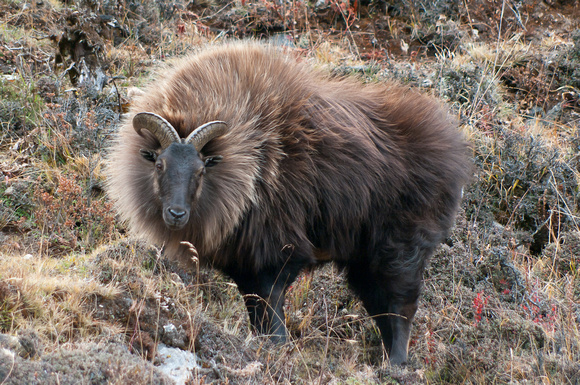
| Description | Size: 3-4.5 ft (90-140 cm) Weight: Males – 161 lb (73 kg); Females – 79 lb (36 kg) Horn Length: Maximum of 18 in (46 cm) Color: Reddish, thick, wooly coats which become thinner and lighter as the winter comes to an end |
| Distribution | Southern ranges of the Himalayas, from Northern India to Bhutan in the east and Tibet in the North, introduced populations live in New Zealand, Ontario, California, New Mexico, Argentina and South Africa |
| Habitat | Jagged and wooded mountains and hills in alpine and sub-alpine regions at elevations of 11,500-14,760 ft; it also sometimes prefers mixed oak forests at 8,200 ft and alpine meadows at 16,400 ft |
| Communication | They communicate through audiovisual, tactile and chemical means |
| Lifespan | 10-14 years; some have lived up to 22 years |
| Diet | Being grazers they primary feed on herbs and grass, but also eat leaves of shrubs during snow-covered winters |
| Adaptations |
|
| Predators | Snow leopards |
| IUCN Conservation Status | Near Threatened |
Behavior
- They are at their most active 3 hours after and before dawn and dusk respectively. The remainder of the day it spends at rest.
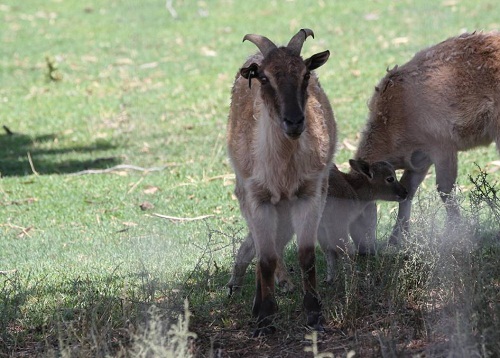
- They are social animals and live in herds sometimes numbering up to 80 individuals, but usually with 23 members. Male herds are separate from those of females, and older males form separate groups than younger ones.
Mating & Reproduction
The breeding season for Himalayan tahrs start in mid-October and last till mid-January. During this period all herds come together with younger males trying to mate with any female they see. Older males walk behind and defend females in heat. Competition between two males involves them walking next to each other with their heads down and horns on display, and one has to chase the other away or block his path in order to be victorious. Head butting is rare, and often half-hearted. Mating occurs between the victor and the female, and after a gestation period of 6-7 months, a single offspring is born.
Life-cycle
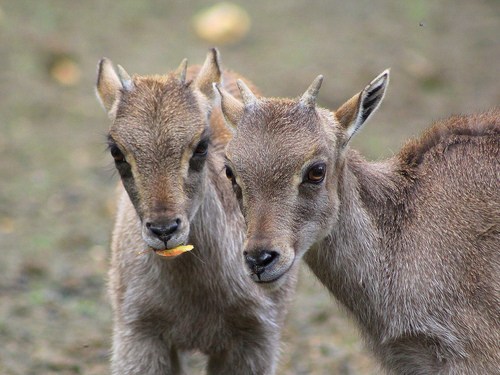
The calf feeds on its mother’s milk for the first six months of its life, and stays with her for 2 years. Both sexes become sexually mature at 2 years, but males rarely get access to females before they are at least 4 years of age.
Interesting Fact
- Himalayan tahrs are considered an invasive species in many of its introduced regions.
References: