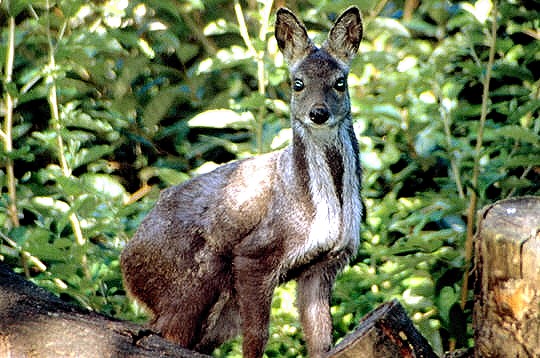
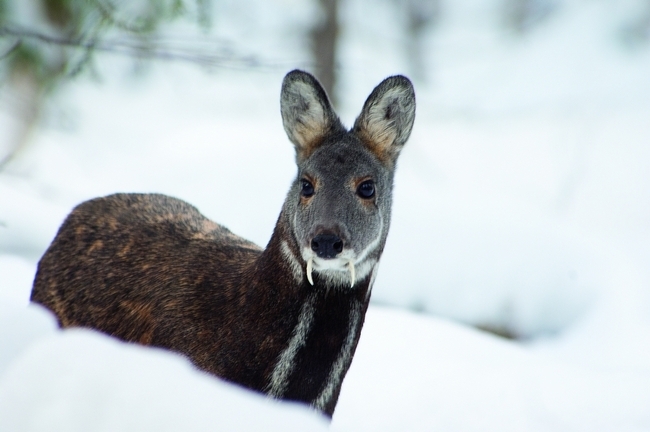
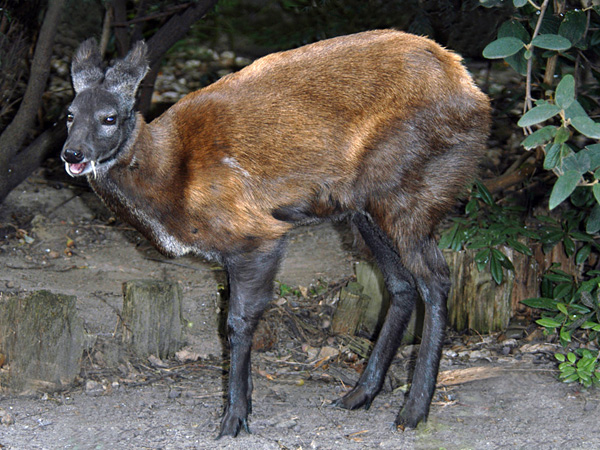
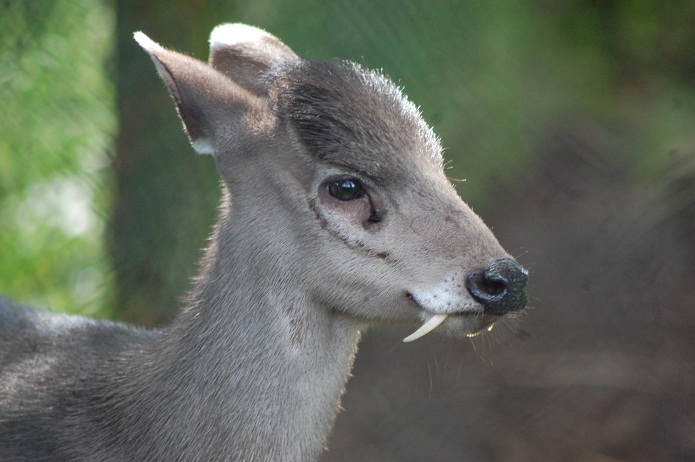
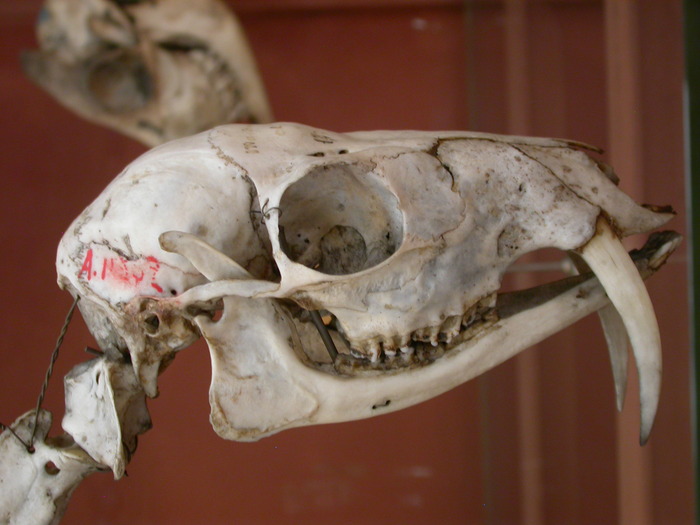
The Siberian musk deer is a species of small, stocky musk deer living in the forested mountainous regions of Northeast Asia. With a kangaroo-like face, long, muscular hind legs, shorter and weaker forelimbs, small chest, highly arched back, and large rear, these animals move in a sequence of coordinated jumps. Unlike other deer species, the male Siberian musk deer do not have antlers but grow fangs during the breeding season.
Scientific Classification
| Kingdom | Animalia |
| Phylum | Chordata |
| Class | Mammalia |
| Order | Artiodactyla |
| Family | Moschidae |
| Genus | Moschus |
| Scientific Name | Moschus moschiferus |
Quick Information
| Other Names | Vampire kangaroo deer, Cerf Porte-musc, Chevrotain Porte-musc, Porte-musc (French), Ciervo Almizclero (Spanish) |
| Subspecies | M. m. moschiferus, M. m. turovi, M. m. arcticus, M. m. sachalinensis, M. m. parvipes |
| Size | Body length: 2.8-3.3 ft (86-100 cm) Shoulder height: 22-26 in (56-67 cm) Tail length: 1.6-2.4 in (4-6 cm) |
| Weight | 33-37.5 lb (15-17 kg) |
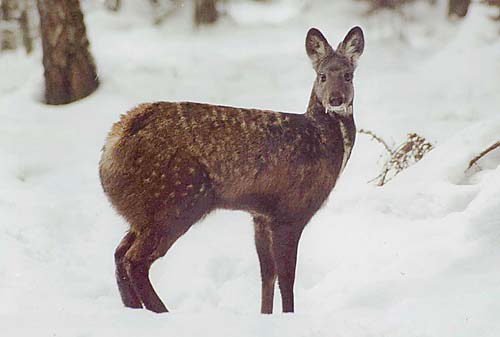
| Color | Adult: Brown body, gray head; some brown patches around the ears and at the top Juvenile: Dark brown with white or yellowish spots |
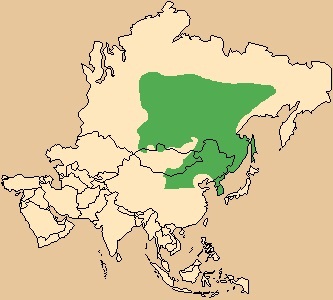
| Distribution | Kazakhstan, Russian Federation, Republic of Mongolia, China, Korea, and Democratic People’s Republic of Korea |
| Habitat | Usually in boreal or coniferous forests at an altitude below 1,600 m; sometimes on shrub covered mountain slopes at heights from 1,900-2,600 m |
| Vocalizations | A soft hissing sound |
| Lifespan | 3-4 years; captive animals live for a maximum of 20 years |
| Diet | Pine needles, tree barks, leaves, buds, young shoots, lichens; prefers digestible, nutritious foods with high protein and low fiber content |
| Adaptations | Long, wide hooves provide extra surface area, keeping it from sinking into snow or soft and soggy surfaces |
| Number of Offspring | 1-2 fawns |
| Breeding Season | November-December |
| Gestation Period | 185-195 days |
| Predators | Lynxes, yellow-throated martens, wolverines, and other predators |
| Conservation Status | Vulnerable |
Behavior
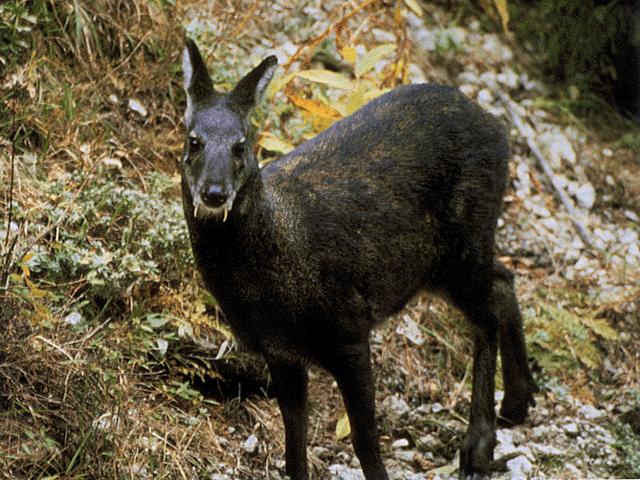
These shy and timid musk deer, active at twilight and night, mostly live a solitary life or may form small groups, comprising 2-3 animals. Its migration over short distances is usually from steep mountain slopes to grasslands near streams or river valleys. It communicates with other deer by using the scent of feces.
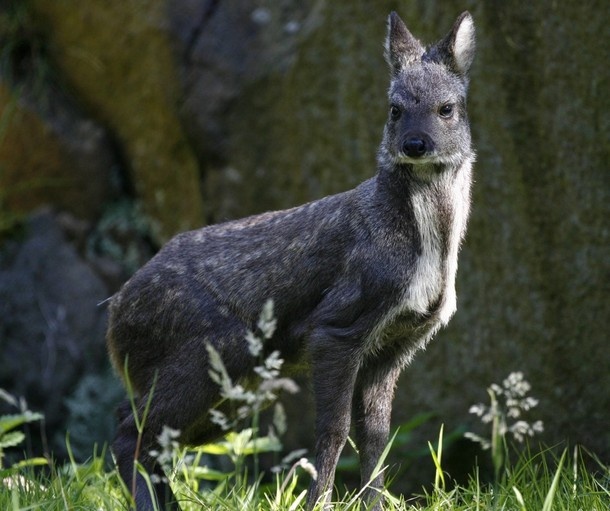
A male deer marks out its territory by wiping strong-smelling secretions on the surrounding plants and trees. Although this may overlap with the feeding range of one or more females, trespassing of male deer is not allowed, and if it occurs, fights may follow.
Mating and Reproduction
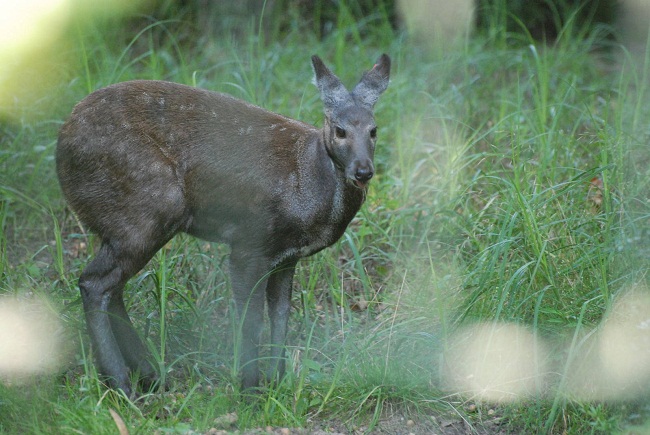
During the mating season, adult males produce musk, which when mixed with their urine produces a strong scent that arouses female deer to enter the estrus. Female musk deer remain in estrus for 3-4 weeks. Moreover, the fangs in male deer are used for fighting with other males as well as attracting the females. Stronger and longer teeth are likely to be more appealing to female deer.
After the gestation period, females give birth to their offspring between May and June. Fawning takes place in secluded areas like underneath small branches of trees, beneath dense shrubs, or near fallen trees.
Life Cycle
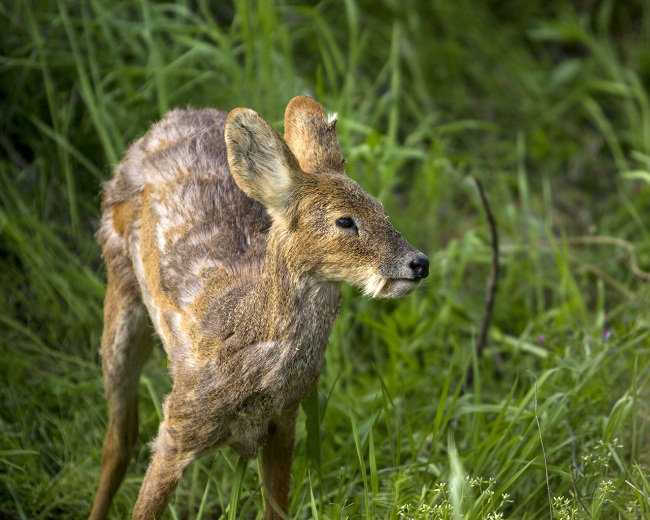
Despite reaching sexual maturity at about 1 year and 3 months of age, fawns live with their mothers, depending on them for food and shelter for two years.
Interesting Facts
- Since scent plays vital roles in their life, the Siberian musk deer have three scent glands – the caudal glands, the musk gland, and the interdigital gland.
- The reddish-brown, waxy musk produced by the Siberian musk deer is a highly priced animal product and thus the deer are hunted for their musk gland.
- Juvenile Siberian musk deer suckle in an unusual way. While nursing, the mother deer lifts its hind leg so that the fawn can touch it with its forelegs.
References